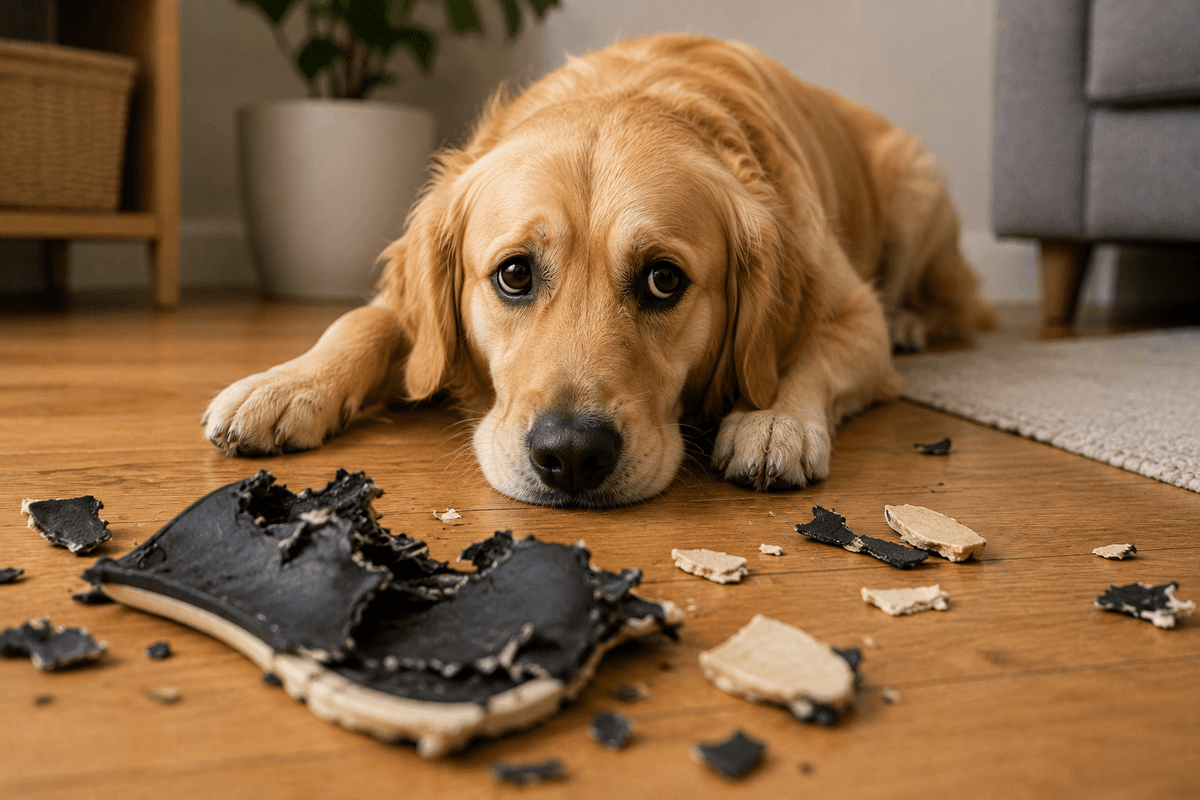
Dogs, especially young and curious ones, have a talent for eating things they shouldn't. Most of the time, small non-food items pass through without incident. But a gastrointestinal foreign body, meaning something stuck somewhere in the digestive tract, is a genuine emergency, and how quickly you act can determine whether treatment is simple or complicated.
If you witnessed your dog swallow a non-food object, or you strongly suspect they did, the right move is to call your veterinarian right away rather than waiting to see if it passes on its own. Objects can move from the stomach into the intestines relatively quickly, and once that happens, treatment options become more limited and more invasive. Research evaluating outcomes of dogs with esophageal and gastric bone foreign bodies found that timing and location both significantly influenced how these cases were managed and how they resolved (Barash et al., 2022).
If your dog is brought in soon after ingestion and the object is still in the stomach, there's a real chance it can be retrieved without surgery. Depending on the object and your veterinarian's assessment, this might mean safely inducing vomiting in a controlled veterinary setting, or retrieving the object endoscopically using a scope passed down the esophagus. A study analyzing endoscopic and surgical removal of gastrointestinal foreign bodies in dogs found that endoscopic retrieval, when appropriate for the object and its location, was an effective and less invasive alternative to surgery (Di Palma et al., 2022). Both endoscopy and induced vomiting are generally less expensive and involve a shorter recovery than surgical removal, which is exactly why prompt action matters: it keeps the less invasive options on the table.
If your dog didn't have a witnessed ingestion, or enough time has passed that an object may have moved into the intestines, watch for the following signs of a possible obstruction:
- Vomiting, especially repeated or persistent vomiting
- Loss of appetite or complete refusal to eat
- Lethargy or noticeably reduced energy
- Abdominal pain, such as a hunched posture, restlessness, or a tense abdomen
- Changes in breathing
A retrospective study of 208 cases of gastrointestinal foreign bodies in dogs and cats found that vomiting was among the most consistently reported clinical signs, reinforcing why this particular symptom shouldn't be dismissed, especially if it's persistent or paired with other signs (Hayes, 2009). Research examining foreign body-induced upper gastrointestinal obstructions has similarly documented this cluster of symptoms as a common presentation across cases (Laiket et al., 2025).
If you suspect your dog ate something they shouldn't have and they're showing any of these signs, don't wait to see if symptoms resolve on their own. What starts as a gastrointestinal obstruction can progress to a life-threatening emergency if blood flow to the affected section of intestine becomes compromised. Research examining attempted medical management of discrete gastrointestinal foreign material found that outcomes were closely tied to how the case was monitored and managed, underscoring that these situations require active veterinary oversight rather than passive waiting at home (Carrillo et al., 2024). There's also evidence that giving anti-nausea medication before a proper veterinary evaluation can actually delay definitive diagnosis and treatment in dogs with a true obstruction, which is another reason to have your veterinarian assess the situation directly rather than trying to manage symptoms at home first (Puzio et al., 2023).
When you bring your dog in for a suspected foreign body, your veterinarian will typically want to perform abdominal imaging, which may include X-rays, an abdominal ultrasound, or both, to determine whether an object is present and, if so, where it's located. A review of imaging approaches for gastrointestinal foreign body obstructions highlights how combining these imaging modalities helps veterinarians characterize an obstruction's location and severity, which directly informs the treatment plan (Meomartino et al., 2026). Bloodwork is also commonly recommended to assess your dog's organ function and overall stability, particularly if they've been vomiting or not eating for a period of time.
Depending on what these tests show, your veterinarian may also start your dog on IV fluids and medications to stabilize them ahead of any further intervention. In more advanced or chronic cases, where an obstruction has been present for some time, research has shown that surgical treatment remains an effective option, though outcomes are generally best when addressed before the obstruction becomes prolonged (Kan et al., 2022).
If your dog has eaten something they shouldn't have, or is showing signs of a possible obstruction, finding emergency care quickly matters. Vetmodo makes it easy to find emergency veterinary hospitals near you, so you can get your dog seen as soon as possible rather than losing time searching for care. Search Vetmodo today to find an emergency hospital near you.