How to Prepare for a 24-Hour Emergency Vet Visit: Triage, Code Status and More | Vetmodo
Emergency/Urgent Care
Staying Calm in the Chaos: How to Optimize Your Pet's 24-Hour Emergency Vet Visit
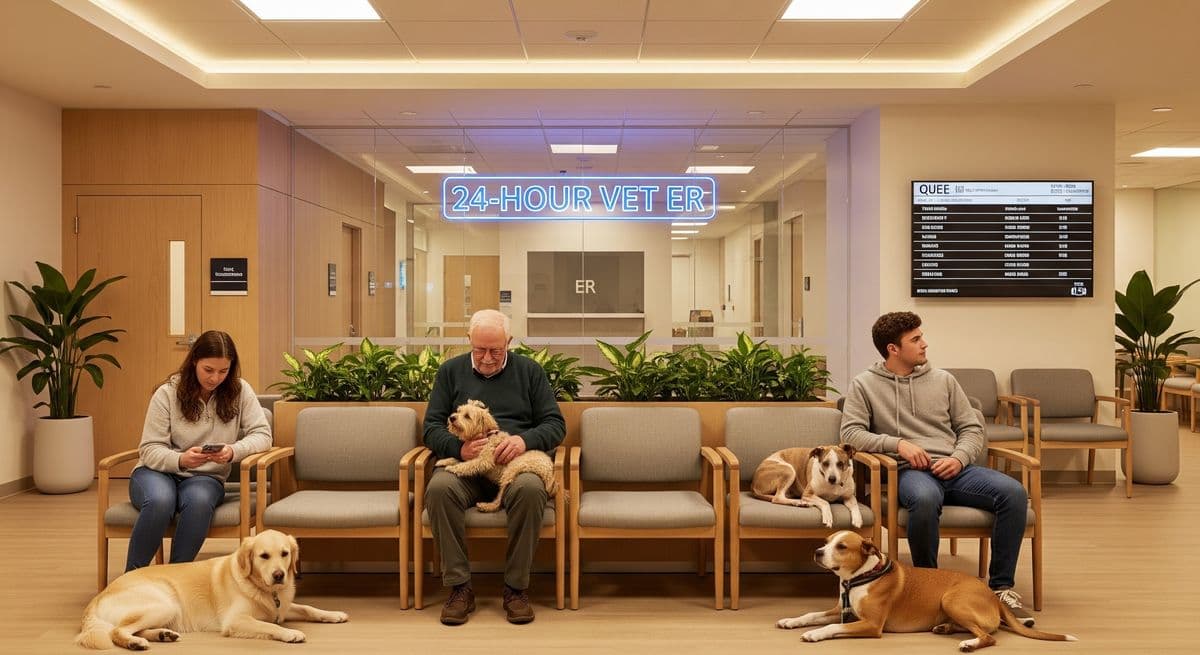
Walking through the doors of a 24-hour emergency veterinary hospital is one of the most disorienting experiences a pet owner can face. The medical team is focused on your pet. Knowing how to communicate, what to bring, and how the system works can meaningfully change what happens next.
Written by Vetmodo Editorial Team
Key takeaways
Emergency rooms triage by clinical severity, not arrival time. A pet being seen before you arrived is not preferential treatment. It means their condition is more immediately life-threatening.
Being transparent about financial constraints early allows the emergency team to prioritize the highest-yield, most life-saving interventions first.
Your primary care veterinarian and the emergency team are on the same side. Coordinating records between both practices is one of the most effective ways to improve the quality of emergency care.
Staying calm and communicating clearly, concisely, and respectfully allows the veterinary team to focus their full attention on your pet.
Introduction: Your Role as Your Pet's Advocate
A pet emergency puts you in a situation most people are not prepared for. The clinical team is trained for exactly this moment, and understanding how they work can make an already frightening experience feel far less chaotic and disorienting. What many owners don't realize is that how you show up in those first minutes genuinely affects the interactions with the veterinary team throughout the visit. With approximately 95% of US pet owners considering their pets to be members of the family, the emotional weight of these moments is real and significant. ()
Trust you can count on
Vetmodo separates editorial guidance from paid clinic placement. Articles identify their authors, reviewers, publication dates, and supporting sources when that information is available.
While the medical team handles the clinical side, you play a vital role as your pet's advocate. By understanding how emergency triage works and arriving prepared, you can help the medical team provide the most efficient care possible.
How Veterinary Triage Works: Why You May Wait While Others Are Seen First
The most common source of frustration in emergency waiting rooms is the wait time. Unlike a general practice with scheduled appointments, emergency rooms operate on a triage system based on clinical severity.
Pets are seen based on the urgency of their condition, not their arrival time. A dog having a seizure or a cat in respiratory distress will always be prioritized over a stable pet with a minor scrape or an ear infection. (Thomovsky & Ilie, 2024) This is not a preference, it is a structured clinical protocol. The triage process is designed to direct the most critical patients to stabilization immediately, because delays in those cases can be fatal. All emergency practitioners are trained to identify and act on these priorities from the moment a patient walks through the door.
If you are in the waiting room, that is generally a good sign: it means your pet's condition is currently stable enough to wait safely. That said, animals can deteriorate. If you notice your pet's gums turning pale, their breathing becoming labored, or any sudden change in their level of consciousness or responsiveness, alert the front desk immediately and ask for a re-triage.
What to Bring: Building Your Emergency Information Pack
In the urgency of an emergency, it is easy to forget basic but critical details. Having the following information ready significantly speeds up the intake process and allows the veterinary team to make faster, more accurate diagnostic decisions.
Current medications. Know the exact drug names and dosages. Better yet, bring the bottles. Some medications affect how emergency drugs interact with your pet's system and must be disclosed immediately.
Medical history summary. If your pet has a chronic condition such as diabetes, heart disease, or kidney disease, bring a digital copy or printed summary of recent laboratory results or specialist reports. An echocardiogram result or a recent blood panel can prevent redundant testing and inform the initial assessment immediately.
A timeline of events. When did the symptoms start? Were they gradual or sudden? Did your pet eat anything unusual? Has this happened before? Specific, chronological details help the emergency veterinarian narrow the differential diagnosis far faster than any single test.
Toxicology packaging. If you suspect ingestion of a toxin, bring the original packaging or a photo of the ingredient label including concentration. The active ingredient and amount are critical for calculating toxicological risk and determining treatment.
Your primary vet's contact information. If your primary care practice is open, call them. Having your pet's records sent electronically to the emergency hospital ensures both teams have the same clinical history. Your primary vet and the emergency team are working toward the same goal. (Bir et al., 2020)
Managing Your Pet's Stress in the Waiting Room
The waiting room of a 24-hour emergency hospital is a high-stimulation environment. Unfamiliar sounds, animals, and smells can significantly elevate fear, anxiety, and stress in a pet that is already unwell. A few practical steps can reduce that burden.
If the lobby is crowded and your pet is stable, ask the front desk whether you can wait in your vehicle. Many ERs will call or text you when a room is ready. For most pets, a quiet car is considerably less stimulating than a busy waiting room.
Your own emotional state matters too. Pets, particularly dogs, are highly sensitive to owner arousal. Speaking in a calm, low voice and maintaining slow, deliberate movements communicates safety rather than crisis and can help keep your pet's physiological stress response from compounding the clinical picture.
Discussing Code Status and Finances Before You Need To
Code status is one of the first questions you may be asked upon arrival, and it is the question most owners are least prepared for. It determines what life-saving measures the team should take if your pet's heart stops or they stop breathing. "Full Code" means you want CPR and advanced life support. "DNR" (Do Not Resuscitate) means you want the team to allow a natural passing without resuscitation.
A multicenter survey of 407 emergency and ICU clients found that owners expressed overall positive experiences with owner-witnessed resuscitation, and believed the option for presence should be provided, but the conversation is significantly less distressing when you have considered it in advance rather than when it arrives without warning in a moment of crisis. (Gradilla et al., 2022)
On finances: emergency medicine is resource-intensive. Most ERs require a deposit upfront for stabilization. Research confirms that clients are occasionally forced to decline care or have pets euthanized due to cost, and that veterinary professionals frequently must divert clients due to insufficient capacity. (Niemiec et al., 2024) If you have a defined financial constraint, communicate it early and directly. This allows the team to construct a tiered plan that prioritizes the highest-yield interventions first. Ask about third-party financing options such as CareCredit or Scratchpay, and if you have pet insurance, have your policy details accessible at check-in.
How to Communicate Effectively with the Emergency Team
Emergency veterinarians and technicians are often simultaneously managing multiple critical cases. Clear, concise communication directly improves the care your pet receives.
Lead with the most urgent concern, then provide a timeline. Specific data is more useful than general descriptions; "vomited four times in two hours" is more actionable than "vomiting a lot." An ER visit is generally not the time to ask about flea preventatives or vaccines. Those conversations are well-suited for your primary care veterinarian. Focus your questions on the current emergency, the diagnostic plan, and the expected next steps.
Once your pet is taken to the treatment area, there will often be a period of quiet while they are being stabilized, assessed, or having blood drawn. Use this time to hydrate, call family, and gather your thoughts. That quiet period is not a bad sign.
Find an Emergency Animal Hospital Before You Need One
One of the most practical steps a pet owner can take is identifying the nearest 24-hour emergency animal hospital before an emergency occurs. UseVetmodo.com to search for and pre-screen local emergency hospitals by location and service type. Knowing the address and phone number of your nearest ER in advance removes one decision from the worst possible moment.
Written by
Vetmodo Editorial Team
Medical disclaimer
This article is educational and does not replace advice, diagnosis, or treatment from a licensed veterinarian. Contact your veterinarian with questions about your pet's health.