There is a particular joy in sharing life with an older dog. The morning walks are slower, the naps are longer, and somewhere along the way your dog has become less of a pet and more of a fixture: a presence so familiar it is hard to imagine the rooms without them. That familiarity is also what makes the senior years feel deceptively stable, because dogs are remarkably good at masking the early signs of the diseases that are quietly taking hold.
The good news is that veterinary medicine has made substantial progress in understanding what happens to dogs as they age and, more importantly, what can be done about it. The 2023 AAHA Senior Care Guidelines provide the most current evidence-based framework for caring for aging dogs. This article translates those recommendations into practical, actionable guidance for owners who want to give their senior dog the best possible chance at a long, comfortable life.
When Is a Dog Considered Senior? Understanding Life Stages by Breed Size
The answer is more nuanced than most owners expect. Dogs do not age uniformly. A Great Dane is considered senior at 6 years, while a Chihuahua may not reach that threshold until 10 or 11. The 2023 AAHA Senior Care Guidelines classify dogs as senior when they have passed the last quarter of their expected lifespan for their size category. In practical terms:
- Small breeds (under 20 lbs): senior from approximately 11 years
- Medium breeds (20 to 50 lbs): senior from approximately 10 years
- Large breeds (50 to 90 lbs): senior from approximately 8 years
- Giant breeds (over 90 lbs): senior from approximately 6 to 7 years
This matters because the timing of recommended screening, monitoring, and preventive interventions is calibrated to these thresholds. If your large-breed dog is 8 years old and you are still treating them like a middle-aged adult, you may be missing a window in which early detection could make a meaningful difference.
Why Twice-Yearly Vet Visits Are Essential for Senior Dogs
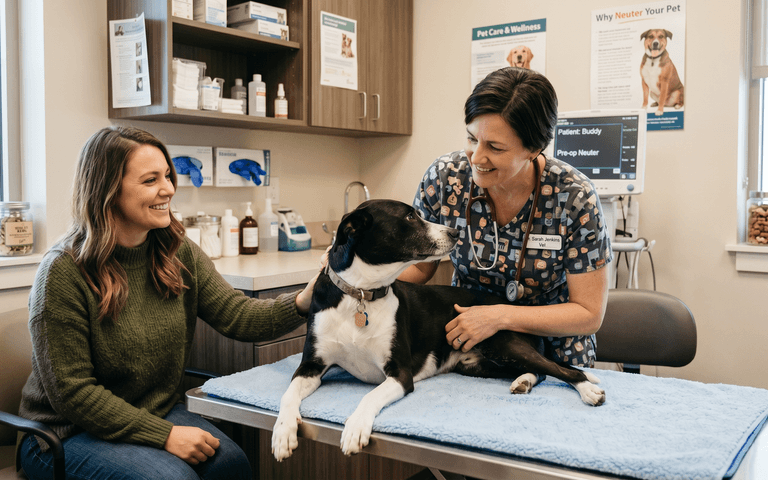
The single most impactful recommendation in the AAHA Senior Care Guidelines is also the one most commonly overlooked: senior dogs should see a veterinarian every six months rather than annually.
The reasoning is straightforward. Dogs age four to eight times faster than humans depending on size and life stage. A year between veterinary visits for a senior dog is roughly equivalent to a human going four to eight years without a medical check-up. In that interval, conditions that were absent or subclinical at the previous visit can progress to a point where treatment options are more limited and outcomes are worse.
Twice-yearly visits serve three distinct functions. First, they establish and update a baseline for that individual dog. They determine what is normal for them so that subtle changes are detectable before they become overt disease. Second, they allow monitoring of conditions already known to be present, such as adjusting medications or checking organ function. Third, they create regular opportunities to detect new conditions in their earliest, most treatable stages.
The Value of a Long-Term Relationship With Your Primary Care Veterinarian
One of the most underappreciated aspects of senior dog care is the value of veterinary continuity. A veterinarian who has known your dog for years, who remembers what their heart sounded like at age 5, what their baseline kidney values were at age 7, and what their normal temperament looks like, is far better equipped to detect meaningful change than a clinician meeting your dog for the first time. Small deviations from an individual dog’s personal baseline are often more clinically significant than values that fall outside population reference ranges.
This is especially true for senior dogs, who require more frequent contact with their veterinary team than at any previous life stage. Building and maintaining a strong relationship with a primary care veterinarian you trust, attending every scheduled visit, keeping records of medications and changes at home, and raising concerns promptly rather than waiting for the next appointment, is one of the most genuinely impactful things an owner can do for an aging dog.
What Happens at a Senior Dog Wellness Visit
A well-structured senior wellness visit is substantially more involved than a routine annual exam. Based on the AAHA guidelines, a comprehensive check-up should include:
- Physical examination: A thorough head-to-tail exam with particular attention to lymph nodes, abdominal organs, heart and lung sounds, muscle mass, coat and skin condition, eye changes, dental health, and joint range of motion. Many important findings in senior dogs are detectable on physical examination before an owner notices any change at home.
- Laboratory screening: Routine bloodwork and urinalysis are recommended at every senior wellness visit, even in apparently healthy dogs. Many of the most common diseases of aging, including kidney disease, liver disease, diabetes, and thyroid dysfunction, produce detectable laboratory abnormalities well before clinical signs develop.
- Blood pressure measurement: Hypertension is common in senior dogs, particularly those with kidney disease, Cushing’s disease, or hyperthyroidism, and causes significant secondary damage to the eyes, kidneys, heart, and brain if undetected.
- Weight and body condition scoring: Objective assessment of body condition at every visit allows trends to be identified over time. Research has found that many owners of overweight dogs rate their dog’s body condition as normal, making veterinary assessment particularly important (Gille et al., 2023).
Common Diseases in Senior Dogs: What Vets Are Screening For and Why
Understanding which conditions are most common in older dogs helps owners know what to monitor at home and why certain tests are being recommended.
Chronic Kidney Disease
Chronic kidney disease (CKD) is one of the most prevalent conditions in senior dogs and one of the most important to catch early. Dogs do not typically show clinical signs such as increased thirst, weight loss, or vomiting until 65 to 75% of kidney function has already been lost. The blood marker SDMA, now included in most comprehensive senior panels, can detect kidney disease significantly earlier than traditional markers, providing a meaningful window for intervention.
Dental Disease
Dental disease affects the majority of dogs over age three and worsens progressively with age. It is not merely cosmetic: untreated dental infection creates a chronic bacterial burden associated with kidney, liver, and heart disease. Many owners are surprised to learn that a dental cleaning under anesthesia, with appropriate pre-anesthetic screening, is safer for their senior dog than allowing active dental infection to continue untreated.
Hypothyroidism
Hypothyroidism is one of the most common endocrine disorders in middle-aged and senior dogs. The thyroid gland’s gradual failure causes weight gain, lethargy, cold intolerance, recurrent skin infections, occasional GI upset, and a dull coat. It is easily diagnosed with a blood test and managed effectively with daily oral medication.
Cushing’s Disease
Cushing’s disease (hyperadrenocorticism), resulting from chronic excess cortisol, is most commonly seen in dogs over 6 years. Classic signs include increased thirst and urination, a pot-bellied appearance, hair loss, and skin fragility. The condition is manageable but requires careful diagnosis and monitoring.
Cardiac Disease
Cardiac disease is particularly prevalent in small breeds, where mitral valve disease is among the most common age-related findings. Annual auscultation allows heart murmurs to be detected and graded before they cause clinical signs, and in some cases early medical intervention can meaningfully delay progression to heart failure.
Cancer
Cancer becomes increasingly prevalent with age and is a leading cause of death in dogs over 10 years. While not all cancers are detectable through routine screening, thorough physical examination, including lymph node palpation and abdominal assessment, combined with owner vigilance for unexplained lumps, weight loss, or appetite changes provides the earliest opportunity for detection.
Recognizing Canine Arthritis Early: Signs Every Dog Owner Should Know
Osteoarthritis affects up to 80% of dogs over 8 years of age (Roitner et al., 2024), yet it is profoundly under-diagnosed. Dogs are stoic - they do not limp dramatically until pain is significant, and early signs are subtle enough to be mistaken for normal aging.
Signs worth watching for at home include:
- Slower to rise from a resting position, particularly in the morning
- Reluctance to use stairs, jump into the car, or use furniture they previously accessed freely
- Lagging behind on walks or tiring more quickly than before
- Stiffness that improves after a few minutes of movement but returns after rest
- Licking, chewing, or paying unusual attention to a specific joint
- Behavioral changes including irritability when touched near certain areas, reduced interaction with family, or uncharacteristic withdrawal
Validated owner questionnaires such as the Canine Brief Pain Inventory (CBPI) provide a standardized way to assess and track your dog’s pain and mobility over time (Cachon et al., 2023). Completing one of these tools before a veterinary appointment gives your vet a concrete, comparable baseline to work from at every visit, making it much easier to detect meaningful change and assess whether treatment is working.
Canine Cognitive Dysfunction: Recognizing and Slowing Cognitive Decline in Senior Dogs
Canine cognitive dysfunction syndrome (CCDS) is a neurodegenerative condition directly analogous to Alzheimer’s disease in humans, with similar pathological changes including amyloid plaque accumulation. It affects a significant proportion of dogs over 11 years and is almost certainly under-recognized because its early signs are commonly attributed to normal aging.
The DISHA framework captures the core clinical signs owners should be aware of:
- Disorientation: getting stuck in corners, staring blankly, appearing lost in familiar environments
- Interactions changed: decreased interest in family members, reduced response to greetings, increased clinginess or withdrawal
- Sleep-wake cycle changes: restlessness or vocalization at night, sleeping more during the day
- Housetraining lapses: accidents in the house in a previously reliable dog
- Activity changes: decreased interest in play, exploration, and environmental engagement
- Anxiety: increased generalized anxiety, new fears, or separation distress
Validated cognitive screening questionnaires, including tools based on the DISHA framework, allow owners to systematically assess whether their dog is showing signs of cognitive decline and track changes over time. Completing a cognitive screener regularly - ideally every six months in dogs over 10 years, and bringing the results to your veterinary appointment gives your veterinarian structured, longitudinal information that is far more useful than a general impression of "seeming a bit slower lately."
CCDS has no cure, but early identification opens a window for management strategies, including dietary modification with medium-chain triglycerides (Pan et al., 2010), SAMe supplementation (Rème et al., 2008), selegiline (Campbell et al., 2001), and regular physical activity (Bray et al., 2023) - that can meaningfully slow progression and preserve quality of life for longer.
Brain Games and Mental Stimulation: Keeping the Aging Brain Engaged
Physical exercise is not the only way to support a senior dog’s brain. Cognitive engagement, the canine equivalent of doing crossword puzzles, appears to play a meaningful role in slowing the progression of age-related cognitive decline. The Dog Aging Project found that dogs who remained mentally and physically active showed better cognitive scores than sedentary peers of the same age, even after accounting for health status.
Simple, low-effort brain games can be incorporated into daily life without requiring specialist equipment or extended time. Puzzle feeders and sniff mats — where dogs work to find kibble or treats hidden in compartments or fabric folds — provide mental stimulation while keeping meal times engaging. Scent games, where treats or a favourite toy are hidden in different rooms and the dog is encouraged to find them using their nose, tap into one of the most cognitively demanding and naturally rewarding activities available to dogs. Gentle obedience refreshers — asking an older dog to practise familiar commands for a few minutes each day — maintain cognitive pathways and provide structured interaction that reinforces the human-dog bond.
Interactive play adapted to the dog’s physical limitations is equally valuable. A senior dog with arthritic hips cannot chase a ball at full speed, but they can still engage with a slow-moving toy, a gentle tug on a soft rope, or a foraging game on the ground. The goal is sustained, gentle engagement: sessions of five to ten minutes several times a day are more cognitively beneficial than a single prolonged effort. Enrichment activities should be adapted regularly to maintain novelty, as the cognitive value of a repeated task diminishes once it becomes routine.
Exercise for Senior Dogs: Low-Impact Movement That Protects Joints and Supports the Brain
Regular physical activity is one of the most powerful tools available for supporting both physical and cognitive health in aging dogs. Research from the Dog Aging Project found that dogs who exercised regularly had significantly better cognitive scores than sedentary dogs of the same age (Bray et al., 2023). A large survey of dog owners found that overweight dogs exercise less frequently and for shorter durations, creating a compounding cycle in which reduced activity promotes weight gain, which further reduces activity tolerance (German et al., 2017).
The key principle for senior dogs is low-impact, consistent, and appropriately dosed exercise; not high-intensity or sporadic activity. Short, frequent outings are significantly preferable to long, irregular ones. A 15-minute leash walk on even ground twice a day is more beneficial for an arthritic dog than a single hour-long walk once a week, and much less likely to trigger post-exercise soreness that discourages further activity.
Low-Impact Exercise Options for Senior and Arthritic Dogs
- Leash walking on flat, even surfaces: the foundation of any senior exercise program. Avoid rough terrain, steep inclines, and off-leash running that involves rapid direction changes.
- Swimming and hydrotherapy: the gold standard for dogs with significant joint disease. Water supports body weight while allowing full range of motion. Underwater treadmill therapy, available at veterinary rehabilitation facilities, is particularly valuable for controlled, progressive exercise.
- Sniff walks: allowing a senior dog to stop and investigate scents at their own pace rather than maintaining a set tempo provides mental stimulation alongside gentle physical movement. These walks are lower in physical intensity but high in cognitive engagement.
- Gentle play at ground level: soft toys, slow-moving objects, and foraging games that do not require jumping, pivoting, or sudden acceleration keep dogs engaged without joint loading.
A useful benchmark is the two-hour rule: if your dog appears noticeably sorer or stiffer two hours after exercise than before it, the session was too much. Reduce intensity or duration at the next session rather than stopping altogether. The goal is to find the level of consistent activity that keeps your dog moving comfortably, not to push limits.
Exercise recommendations for senior dogs should account for concurrent health conditions. A dog with significant cardiac disease, respiratory compromise, or neurological involvement needs an exercise plan tailored specifically to those conditions. A rehabilitation veterinarian can be an invaluable partner in designing a program that keeps an aging dog moving safely.
Senior Dog Nutrition and Weight Management: What the Evidence Shows
Lean body condition is one of the most powerful predictors of longevity in dogs. Research from the landmark Purina lifespan study demonstrated that dogs maintained at a lean body condition lived a median of 1.8 years longer than their heavier littermates (Kealy et al., 2002), a finding replicated and extended by Lawler and colleagues over two decades of follow-up (Lawler et al., 2008). A longitudinal study of Labrador retrievers found that every additional kilogram of body weight at 10 years of age was associated with a 19% higher hazard of dying, and that even late-life improvements in body composition were protective (Penell et al., 2019).
For senior dogs who are already overweight, this evidence is genuinely encouraging: it is not too late. Weight loss at any age improves outcomes. Prescription weight management diets, structured portion control, and appropriate exercise tailored to the individual dog’s joint and cardiovascular status are the cornerstones of a weight loss program. Research has found an interesting parallel between dog and owner weight, with evidence suggesting that weight loss programs undertaken jointly may be mutually reinforcing (Niese et al., 2021).
Senior dogs may also benefit from diets with adjusted protein levels to support muscle mass, omega-3 fatty acid enrichment to reduce joint inflammation, and in some cases functional ingredients specifically targeting cognitive health. A biological age study in dogs found that common clinical markers, including weight, body condition, and laboratory values, were meaningful predictors of health trajectory and mortality risk, underscoring the importance of regular nutritional assessment in aging dogs.
The right diet for your individual dog depends on their concurrent health conditions and should be determined in conversation with your veterinarian. Avoid making significant dietary changes based on marketing claims alone.
A Final Word: Being Your Senior Dog’s Advocate, and how Vetmodo Can Help
The most important thing an owner of a senior dog can do is stay engaged. Attend the recommended twice-yearly veterinary visits. Track changes at home, including appetite, water intake, sleep patterns, mobility, behavior, and bring those observations to appointments. Use validated screening questionnaires for arthritis and cognitive decline to give your veterinarian structured, comparable information at every visit.
Senior dogs cannot tell us when something is wrong. But with the right knowledge, a consistent relationship with a veterinarian who knows your dog well, and attentive observation at home, we can learn to listen anyway.
VetModo.com lets you find the perfect local expert for your dog's needs. By getting the right vet on board right from the start, you can make sure your beloved furry friend gets to enjoy a happy, long, and comfortable life.