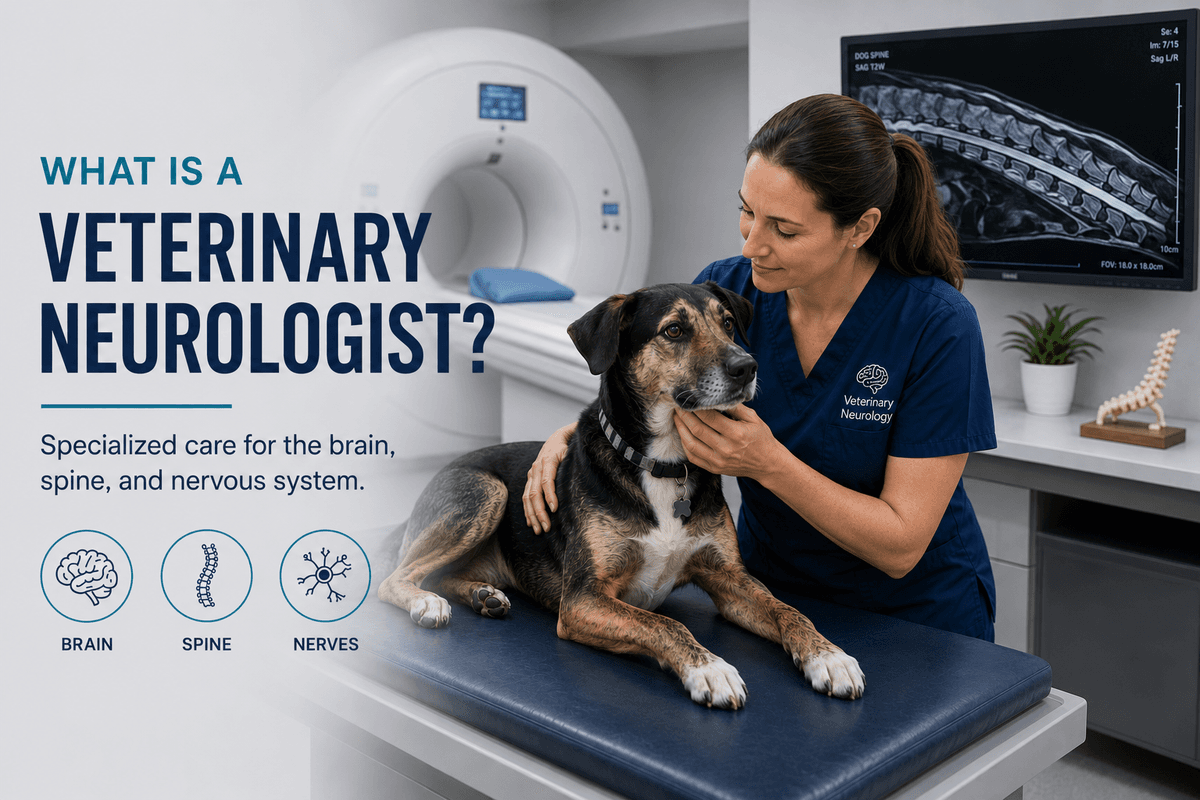
Watching your pet have a seizure, struggle to walk, or suddenly lose the use of their back legs is frightening. In these moments, your regular veterinarian may recommend a veterinary neurologist, a specialist trained specifically in disorders of the brain, spinal cord, and nervous system. Here’s what that specialty actually involves and why it can make such a difference for pets with complex neurologic conditions.
Like other veterinary specialists, a veterinary neurologist completes a standard veterinary degree first, then pursues additional years of focused training. This usually includes an internship followed by a multi-year residency in neurology and neurosurgery, where the veterinarian works directly with board-certified neurologists on a wide range of complex cases.
After residency, the veterinarian must pass a certifying examination through a recognized specialty organization to become board-certified. This depth of training is what allows a neurologist to recognize subtle patterns in a pet’s symptoms that point to a specific area of the nervous system, something that can be difficult to pinpoint without specialized experience (Hahn, 2018).
Veterinary neurologists manage a wide range of conditions affecting the brain, spinal cord, and nerves. Common reasons for referral include:
- Seizures and other forms of epilepsy that need specialized diagnosis and long-term management.
- Brain diseases, including inflammatory conditions, infections, and tumors affecting the brain.
- Spinal cord diseases, such as disc herniation, that can cause pain, weakness, or paralysis.
- Neuromuscular diseases that affect how nerves communicate with muscles.
- Sudden loss of the ability to walk, or paralysis, which often requires urgent evaluation.
- Birth defects of the spine that affect a young pet’s development and mobility.
Because the nervous system controls so much of how a pet moves, feels, and behaves, neurologists often serve as the specialist who connects symptoms that might otherwise seem unrelated (Rossmeisl & Tipold, 2025).
Diagnosing neurologic disease often requires more than a physical exam. Veterinary neurologists rely on a detailed neurologic examination to localize the problem to a specific part of the nervous system, then confirm the diagnosis using advanced imaging, most often MRI, along with specialized testing like spinal fluid analysis or nerve conduction studies.
This combination of hands-on assessment and advanced diagnostics is part of what allows neurologists to catch conditions that general practice tools can’t always identify clearly. Case reports from the field continue to expand what’s understood about how various neurologic conditions present and progress in pets (Santifort et al., 2025).
Many do. Neurosurgery is a significant part of the specialty, particularly for pets with disc herniations that are causing pain, weakness, or paralysis. Surgical decompression can relieve pressure on the spinal cord and, in many cases, restore a pet’s ability to walk, especially when performed promptly (Laitinen & Puerto, 2005).
Some veterinary neurologists also perform brain surgery for pets with certain tumors or structural abnormalities, though this is a smaller subset of highly specialized cases. Current guidelines help both specialists and general practitioners understand when surgery is likely to help and how quickly a pet needs to be evaluated after signs of spinal cord injury appear (Olby et al., 2022; Moore et al., 2020).
Not every neurologic condition requires surgery. Many pets, especially those with epilepsy, need ongoing management rather than a one-time fix. Veterinary neurologists help design medication plans to control seizures, monitor how well a pet responds over time, and adjust treatment as needed if seizures change in frequency or severity.
For pets experiencing prolonged or repeated seizures, also called status epilepticus or cluster seizures, neurologists follow evidence-based protocols to stabilize the pet quickly and reduce the risk of complications (Charalambous et al., 2024). Beyond medication, some pets also benefit from rehabilitation therapy to support recovery and mobility after a neurologic event (Frank & Roynard, 2018).
Yes. Many veterinary neurologists are active in research aimed at improving how neurologic conditions are diagnosed and treated. This includes studies on surgical techniques, medication protocols, and consensus statements that help standardize care across the profession, so pets benefit from the most current, evidence-based approaches available (Rossmeisl & Tipold, 2025).
If your pet is referred to a veterinary neurologist, a little preparation can help the visit go smoothly:
- Bring any prior bloodwork, imaging, or medical records from your regular veterinarian.
- Keep a log of symptoms, including when seizures happen, how long they last, and what they look like.
- Note any changes in your pet’s gait, coordination, or behavior, even subtle ones.
- Prepare questions about diagnostic steps, treatment options, and what recovery might look like.
Neurologic symptoms can be some of the most alarming things a pet owner witnesses, but a veterinary neurologist brings the training and tools to figure out what’s happening and guide your pet toward the best possible outcome, whether that means surgery, medication, or a combination of both.
If your pet is showing signs of a neurologic condition, Vetmodo makes it easy to find a board-certified veterinary neurologist near you, compare clinic services, and get connected with specialized care quickly. Search Vetmodo to find a trusted neurology specialist close to home.