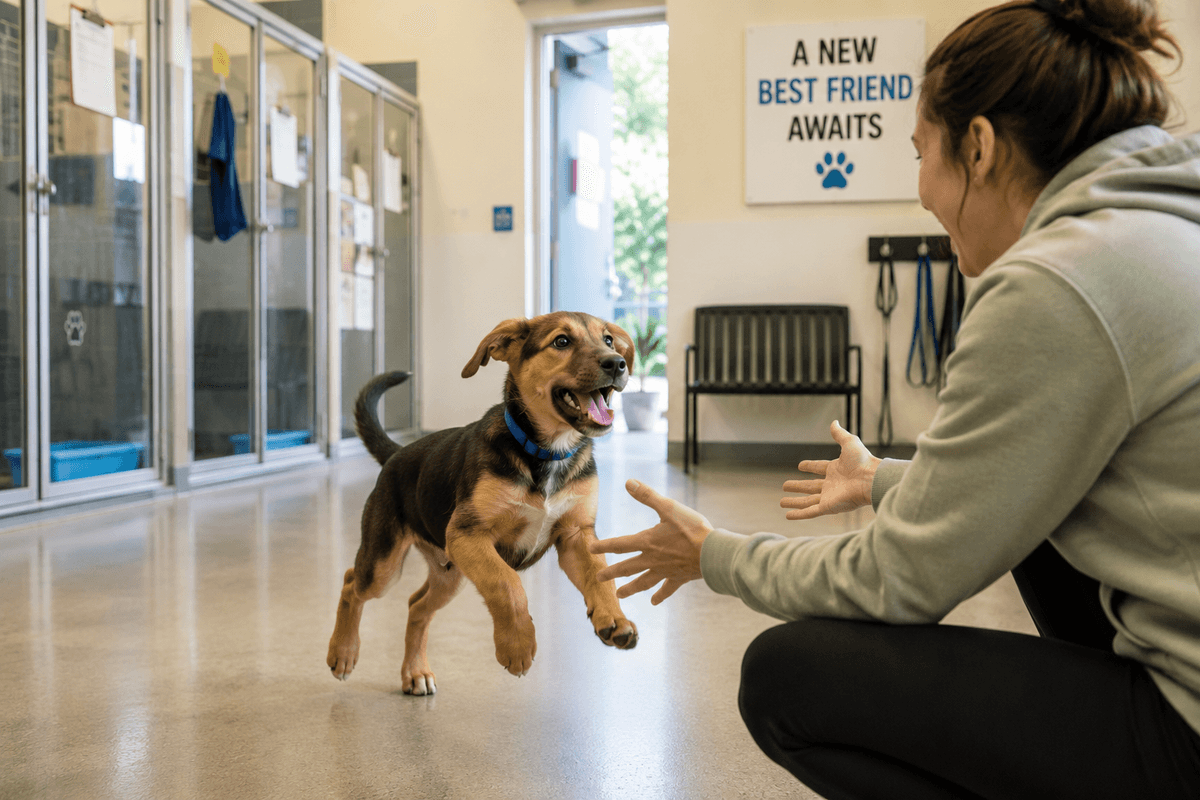
Bringing home a new puppy or young dog is exciting, and a little overwhelming. Whether your new companion came from a shelter, a rescue, or a breeder, the first few weeks set the foundation for a healthy, happy life together. This guide walks through the essentials: feeding, veterinary care, parasite and illness watch-outs, and socialization. It is meant as general education for new owners, not a substitute for the individualized advice of your own veterinarian, who should be your first call for anything specific to your puppy.
One of the simplest and most helpful things you can do on day one is find out what your puppy has been eating. Before you leave the shelter, rescue, or breeder, ask:
- What brand and formula of food the puppy was being fed
- How much and how often they were fed
- Whether they were eating well and had normal stools
- If possible, take home a small supply of that same food
Keeping your puppy on the same food at first avoids stacking a diet change on top of the stress of a new home, which is a common trigger for stomach upset. You can always transition to a different food later, once your puppy has settled in.
Puppies have sensitive digestive systems, and switching food too quickly is a frequent cause of diarrhea and vomiting. When you do change foods, do it gradually over about a week to ten days by mixing the old and new food together and slowly shifting the ratio:
- Days 1 to 3: about 75% old food, 25% new food
- Days 4 to 6: roughly half and half
- Days 7 to 9: about 25% old food, 75% new food
- Day 10: fully on the new food
Go slower if your puppy shows any digestive upset. Certain probiotic supplements during diet transitions may help support digestion, and probiotics are generally well tolerated in healthy dogs. Evidence for a clear benefit is mixed, so it is worth discussing with your veterinarian rather than assuming it is necessary. If your puppy develops persistent diarrhea, vomiting, or a drop in appetite during a food change, pause and contact your veterinarian, since young puppies can become dehydrated quickly.
The pet food aisle is crowded with marketing claims, so it helps to know what actually matters. A few reliable signals of quality (Greco, 2014):
- Formulated for puppies or "growth." Puppies have different nutritional needs than adult dogs, so the food should be labeled for growth or for "all life stages," not adult maintenance. Large-breed puppies benefit from a formula specifically designed for large-breed growth, which helps support healthy bone development.
- Meets AAFCO nutritional standards. Look for a statement on the bag indicating the food is complete and balanced for growth according to AAFCO profiles or feeding trials.
- Made by a manufacturer that follows WSAVA guidelines. Brands that meet the World Small Animal Veterinary Association's recommendations, such as Hill's, Royal Canin, and Purina (as examples), employ qualified nutritionists, own their manufacturing, and run quality-control testing. These are widely regarded as dependable choices.
If you are unsure which food fits your puppy's breed, size, and needs, your veterinarian can point you toward an appropriate option.
Schedule a veterinary checkup soon after bringing your puppy home, ideally within the first few days. This first visit is important for more than vaccines. Your veterinarian will weigh your puppy, check for congenital issues, look for early signs of illness, and set up a preventive care plan. It is also the moment to start building a relationship with a clinic you trust before an emergency ever arises.
Bring any paperwork you received, including records of vaccines or deworming already given, so your veterinarian can pick up where the previous care left off.
Vaccines protect puppies from serious and sometimes fatal diseases. Puppies receive a series of shots rather than a single dose, because the immunity passed from their mother gradually fades and can interfere with early vaccines. The series ensures protection kicks in as that maternal immunity wanes.
In general, a typical puppy vaccine series works like this (AAHA, 2022):
- Begins around 6 to 8 weeks of age
- Boosters follow every 2 to 4 weeks
- Continues until the puppy is about 16 weeks old or older
Core vaccines are recommended for all dogs and protect against distemper, adenovirus (hepatitis), parvovirus, and rabies. As of a 2024 update to the guidelines, leptospirosis is also now recommended as a core vaccine for dogs (AAHA, 2022). Additional "lifestyle" vaccines, such as those for kennel cough (Bordetella), canine influenza, or Lyme disease, may be recommended based on where you live and your puppy's exposure risk. Your veterinarian will tailor the exact schedule to your puppy and your region, so treat the timeline above as a general framework rather than a fixed prescription.
Until your puppy has completed their core vaccine series, they remain vulnerable to diseases like parvovirus. This affects where it is safe to take them, which we cover in the socialization section below.
Most puppies are born with or quickly pick up intestinal worms, so routine deworming is a standard and expected part of early care, not a sign that something is wrong. Puppies are typically dewormed multiple times in their first few months, often starting at around 2 weeks of age and repeating every 2 to 3 weeks early on, then transitioning to a regular parasite-prevention product.
Your veterinarian will also discuss protection against:
- Fleas and ticks
- Heartworm, which is transmitted by mosquitoes and prevented with a monthly or long-acting product
- Intestinal parasites, some of which can spread to people, making prevention a family-health matter as well as a pet-health one
Bringing a fresh stool sample to your veterinary visits helps check for parasites that may not be visible.
Puppies from shelters, rescues, and any environment where many animals are housed together are more likely to have picked up contagious infections. Crowding, stress, and mixing of animals from different sources all raise the risk. Nearly all shelters provide vaccinations and have quarantine protocols, but even so, sometimes common diseases are still able to infect shelter animals. Two categories are worth watching closely in the first couple of weeks.
Signs that warrant a call to your veterinarian include:
- Diarrhea, especially if it contains blood or mucus
- Visible worms in the stool or around the rear
- Vomiting
- A bloated belly, poor weight gain, or a dull coat
- Lethargy or a drop in appetite
"Kennel cough" and similar respiratory infections spread easily in group housing. Signs to look for include:
- Coughing, sometimes a honking sound
- Sneezing or nasal discharge
- Runny or goopy eyes
- Reduced appetite or low energy
Many respiratory infections are mild and self-limiting, but some are not, and young puppies can deteriorate faster than adult dogs. Any breathing difficulty, refusal to eat, marked lethargy, or worsening over a day or two deserves prompt veterinary attention rather than a wait-and-see approach. When in doubt, call or visit.
The weeks between roughly 3 and 14 weeks of age are a sensitive period when puppies form lasting impressions about what is normal and safe in the world. Positive, gentle experiences during this window are strongly linked to better-adjusted, more confident adult dogs, while missed socialization is associated with fear and behavior problems later on (Howell et al., 2015; Stolzlechner et al., 2022). This is one of the most valuable investments you can make in your puppy's future.
Good socialization means calm, positive exposure to a variety of experiences, not overwhelming your puppy. Aim to gently introduce:
- Different people, including children, and people wearing hats, glasses, or uniforms
- Everyday sights and sounds, like vacuum cleaners, traffic, and doorbells
- Various surfaces, handling of paws and ears, and gentle grooming
- Car rides and, eventually, new places
Keep experiences short and rewarding, and let your puppy retreat if they seem frightened. Well-run puppy classes can be an excellent structured way to socialize while also starting basic training (Mendez, 2023). Positive reinforcement is also key - avoid yelling, scaring, or otherwise "negative" reinforcement measures as this can lead to a puppy being frightened. Reward the good behaviors!
Here is the tension every new owner faces: the socialization window opens before the vaccine series is complete. The goal is to socialize safely rather than skip it. Practical ways to strike that balance:
- Avoid places with high traffic from unknown dogs, such as dog parks and pet store floors, until your veterinarian says the vaccine series is far enough along
- Steer clear of any animal that appears sick, is coughing, or has diarrhea
- Arrange playdates with healthy, fully vaccinated adult dogs in clean, familiar settings
- Carry your puppy in busy public places so they can experience the sights and sounds without contacting contaminated ground
- Choose puppy classes that require proof of age-appropriate vaccination from all participants
Your veterinarian can give you a clearer sense of when it is safe to expand your puppy's world based on their vaccine progress and the disease risks in your area.
- Puppy-proof your home. Remove or secure electrical cords, toxic plants, medications, small swallowable objects, and human foods that are dangerous to dogs.
- Identification. Ask your veterinarian about a microchip, and use a collar with an ID tag. Puppies are escape artists.
- Start a routine early. Consistent feeding, potty breaks, and sleep times help housetraining and reduce anxiety.
- Be patient with house training. Accidents are normal. Frequent trips outside and rewarding success work better than punishment.
- Budget for care. Factor in vaccines, parasite prevention, spay or neuter, food, and a cushion for unexpected veterinary visits. Pet insurance is worth researching early, while your puppy is young and healthy.
Every recommendation in this guide points back to one thing: a trusted veterinarian who knows your puppy. The sooner you establish that relationship, the better prepared you will be for both routine care and the occasional surprise. If you are still looking for a clinic, Vetmodo can help you find and compare veterinary practices near you, so you can get your new puppy in for that important first visit without the guesswork. Start your search on Vetmodo today and give your puppy the healthiest possible start.