Introduction: Your Role as Your Pet's Advocate
A pet emergency puts you in a situation most people are not prepared for. The clinical team is trained for exactly this moment, and understanding how they work can make an already frightening experience feel far less chaotic and disorienting. What many owners don't realize is that how you show up in those first minutes genuinely affects the interactions with the veterinary team throughout the visit. With approximately 95% of US pet owners considering their pets to be members of the family, the emotional weight of these moments is real and significant. (Niemiec et al., 2024)
While the medical team handles the clinical side, you play a vital role as your pet's advocate. By understanding how emergency triage works and arriving prepared, you can help the medical team provide the most efficient care possible.
How Veterinary Triage Works: Why You May Wait While Others Are Seen First
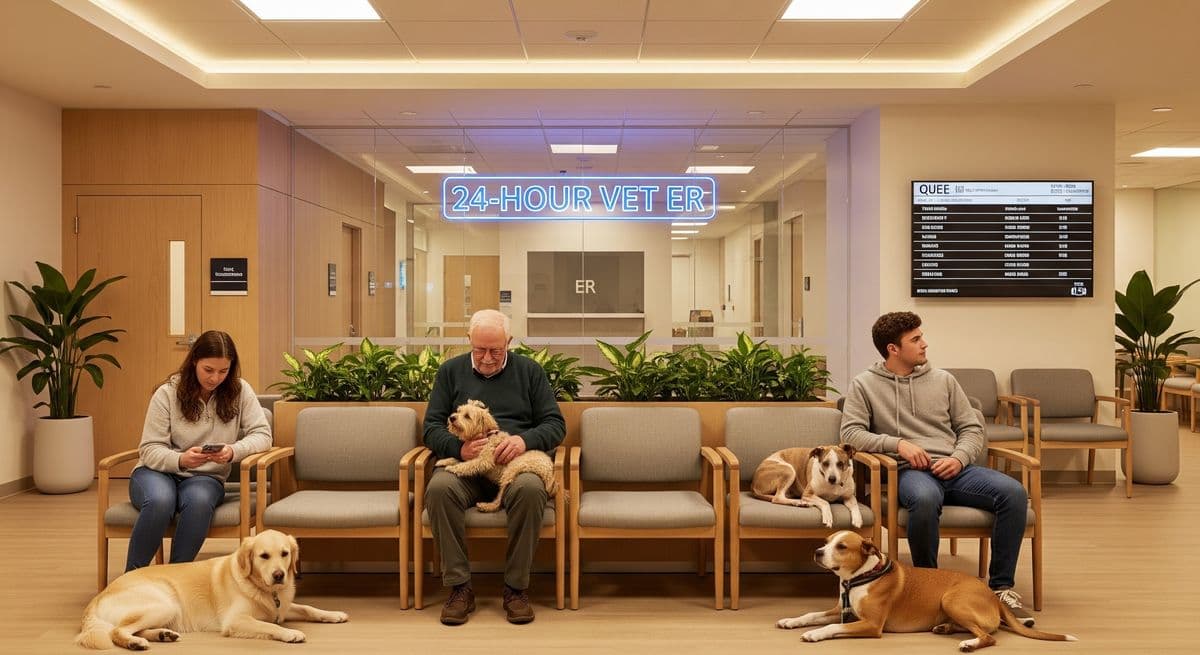
The most common source of frustration in emergency waiting rooms is the wait time. Unlike a general practice with scheduled appointments, emergency rooms operate on a triage system based on clinical severity.
Pets are seen based on the urgency of their condition, not their arrival time. A dog having a seizure or a cat in respiratory distress will always be prioritized over a stable pet with a minor scrape or an ear infection. (Thomovsky & Ilie, 2024) This is not a preference, it is a structured clinical protocol. The triage process is designed to direct the most critical patients to stabilization immediately, because delays in those cases can be fatal. All emergency practitioners are trained to identify and act on these priorities from the moment a patient walks through the door.
If you are in the waiting room, that is generally a good sign: it means your pet's condition is currently stable enough to wait safely. That said, animals can deteriorate. If you notice your pet's gums turning pale, their breathing becoming labored, or any sudden change in their level of consciousness or responsiveness, alert the front desk immediately and ask for a re-triage.
What to Bring: Building Your Emergency Information Pack
In the urgency of an emergency, it is easy to forget basic but critical details. Having the following information ready significantly speeds up the intake process and allows the veterinary team to make faster, more accurate diagnostic decisions.
Current medications. Know the exact drug names and dosages. Better yet, bring the bottles. Some medications affect how emergency drugs interact with your pet's system and must be disclosed immediately.