What is a Veterinary Cardiologist and When Does Your Pet Need One?
VE
Vetmodo Editorial TeamMay 25, 2026
Key Takeaways
•Veterinary cardiologists are board-certified specialists in heart disease for dogs and cats. They complete years of advanced postgraduate training beyond veterinary school and pass rigorous examinations administered by the ACVIM. They are specialists whose entire clinical focus is cardiovascular disease.
•A heart murmur does not automatically mean your pet needs a cardiologist, but some do. Your primary care veterinarian will assess murmur grade, breed risk, and clinical signs to determine whether specialist evaluation is warranted. For certain breeds and certain murmur grades, early cardiology referral changes long-term outcomes.
•Timing of specialist involvement matters. Research shows that dogs managed collaboratively between a primary care veterinarian and a cardiologist have longer survival times in congestive heart failure than those managed by a primary care veterinarian alone. Earlier referral, not just referral at crisis point, is the evidence-based approach.
•Veterinary cardiology is more than diagnostics - it includes interventional procedures. Pacemaker implantation, balloon valvuloplasty, and catheter-based procedures for congenital heart disease are available at specialist centers and can dramatically change the prognosis for selected patients.
Most pet owners first hear the word "cardiologist" in a veterinary context when their dog or cat has been found to have a heart murmur, an abnormal rhythm, or unexplained signs such as exercise intolerance, coughing, or breathing difficulties. It can feel alarming, and the question that follows is almost always the same: does my pet actually need a specialist, or is this something my regular vet can handle?
The answer depends on the individual patient, and understanding what a veterinary cardiologist does and when they add value is the best way for owners to navigate that question with confidence.
What Is a Veterinary Cardiologist?
A veterinary cardiologist is a board-certified specialist in cardiovascular disease in animals. In North America, board certification is awarded by the American College of Veterinary Internal Medicine (ACVIM) — Cardiology, following completion of a one-year rotating internship, a three-year cardiology residency at an ACVIM-approved institution, and passage of a rigorous written and practical examination. The credential conferred is DACVIM (Cardiology). In Europe, the equivalent credential is awarded by the European College of Veterinary Internal Medicine (ECVIM-CA).
This is not a short path. A veterinary cardiologist has typically spent seven or more years in postgraduate training beyond veterinary school before seeing their first patient as a specialist. That training is focused exclusively on cardiovascular disease: diagnosing it, staging it, managing it medically, and in some cases treating it with interventional procedures that require highly specialized equipment and expertise.
Cardiologists work primarily in specialty hospitals, university teaching hospitals, and referral centers. They work alongside primary care veterinarians rather than replacing them. The most effective model is a collaborative one in which the cardiologist provides specialist input and the primary care veterinarian manages the broader relationship with the patient and family.
What Does a Veterinary Cardiologist Actually Do?
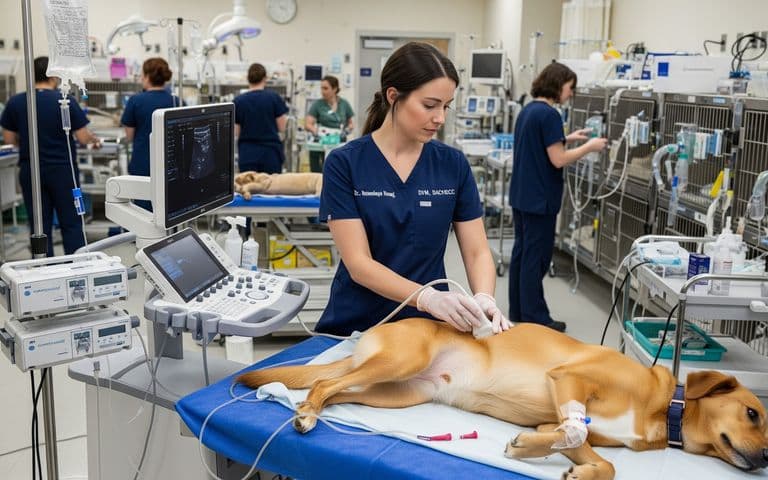
The core of a veterinary cardiologist's work is echocardiography, or ultrasound imaging of the heart. This is the single most informative diagnostic tool in veterinary cardiology, allowing direct visualization of heart chamber dimensions, wall thickness, valve structure and function, and the direction and velocity of blood flow. Standardized echocardiographic measurements in healthy dogs have now been published and validated, providing cardiologists with precise reference values against which an individual patient's heart can be compared(Owens et al., 2023).
Beyond echocardiography, cardiologists routinely interpret electrocardiograms (ECGs) and 24-hour Holter monitors for arrhythmia detection, analyze cardiac biomarkers such as NT-proBNP and troponin-I, and perform chest radiograph interpretation in the context of cardiac disease staging. Advanced imaging including CT angiography is increasingly available at specialist centers for complex congenital cases.
Frequently asked questions
Does a dog with a heart murmur need to see a cardiologist?
It depends on the murmur grade, your dog's breed, and whether any clinical signs are present. Low-grade murmurs in otherwise healthy dogs may only require monitoring by your primary care veterinarian with periodic rechecks. However, echocardiography performed by a cardiologist is needed to identify the underlying cause, stage the disease, and establish a baseline for tracking progression over time. The ACVIM guidelines for myxomatous mitral valve disease define specific echocardiographic thresholds that determine when treatment should begin, thresholds that cannot be assessed without specialist imaging. If your dog has a murmur of grade three or above, is showing any clinical signs such as coughing or reduced exercise tolerance, or belongs to a breed at elevated cardiac risk, a cardiology referral is worth discussing with your veterinarian promptly.
Should cats be screened for heart disease even if they seem healthy?
For high-risk breeds - yes, and potentially others as well. Because cats are exceptionally good at concealing illness. Hypertrophic cardiomyopathy, the most common feline heart condition, frequently produces no detectable signs at home until the disease is advanced. Research has found cardiomyopathy in approximately 15% of apparently healthy cats, meaning a significant proportion of affected animals appear entirely normal to their owners. In high-risk breeds including Maine Coons, Ragdolls, and British Shorthairs, proactive echocardiographic screening is recommended even in the absence of clinical signs. A murmur, gallop rhythm, or arrhythmia detected incidentally during a routine veterinary visit is also a strong indication for cardiology referral, regardless of how well the cat appears at home.
What is the difference between a heart murmur and heart failure in dogs and cats?
A heart murmur and heart failure are not the same thing, and a pet can have one without the other. A heart murmur is an abnormal sound caused by turbulent blood flow, most commonly from a leaking valve, and indicates a structural change in the heart. It does not by itself mean the heart is failing. Heart failure is a clinical syndrome that occurs when the heart can no longer pump blood effectively enough to meet the body's demands, resulting in fluid accumulation in the lungs or abdomen. Many dogs with heart murmurs live for years without ever developing heart failure, particularly when the condition is detected early and monitored appropriately. The goal of specialist monitoring is to detect progression toward heart failure early enough to intervene before it occurs.
Citations
Beaumier A, et al. Clinical findings and survival in dogs with advanced heart failure. J Vet Intern Med. 2018. https://pubmed.ncbi.nlm.nih.gov/29635788/
Borgeat K, et al. Sudden cardiac death in dogs with atrial fibrillation. J Vet Intern Med. 2021. https://pubmed.ncbi.nlm.nih.gov/34750853/
Ferasin L, et al. Diagnostic value of cardiac troponin-I assay. J Vet Cardiol. 2024. https://pubmed.ncbi.nlm.nih.gov/39293351/
Franchini A, et al. Predictors of reoccurrence of congestive signs. J Vet Cardiol. 2021. https://pubmed.ncbi.nlm.nih.gov/33706221/
Keene BW, et al. ACVIM guidelines for MMVD in dogs. J Vet Intern Med. 2019. https://pubmed.ncbi.nlm.nih.gov/30974015/
Kittleson MD, Côté E. Feline Cardiomyopathies: 1. General concepts. J Feline Med Surg. 2021. https://pubmed.ncbi.nlm.nih.gov/34693806/
Kittleson MD, Côté E. Feline Cardiomyopathies: 2. Hypertrophic cardiomyopathy. J Feline Med Surg. 2021. https://pubmed.ncbi.nlm.nih.gov/34693811/
LeBlanc NL, et al. Complications in dogs undergoing interventional cardiology. J Vet Cardiol. 2019. https://pubmed.ncbi.nlm.nih.gov/31174729/
Lefbom BK, Peckens NK. Impact of collaborative care on survival time for dogs with congestive heart failure. J Am Vet Med Assoc. 2016. https://pubmed.ncbi.nlm.nih.gov/27308884/
Lucina SB, et al. Congenital Heart Disease in Dogs: Retrospective Study. Top Companion Anim Med. 2021. https://pubmed.ncbi.nlm.nih.gov/33346164/
Luis Fuentes V, et al. ACVIM guidelines for cardiomyopathies in cats. J Vet Intern Med. 2020. https://pubmed.ncbi.nlm.nih.gov/32243654/
Owens EJ, et al. Echocardiographic measurements and cardiac biomarkers in healthy dogs. J Vet Intern Med. 2023. https://pubmed.ncbi.nlm.nih.gov/36482834/
Oyama MA, Adin D. Quantification of loop diuretic responsiveness for CHF. J Vet Intern Med. 2023. https://pubmed.ncbi.nlm.nih.gov/36408832/
Payne JR, et al. Cardiomyopathy prevalence in healthy cats (CatScan study). J Vet Cardiol. 2015. https://pubmed.ncbi.nlm.nih.gov/26776583/
VE
Written by
Vetmodo Editorial Team
The information on this website is for educational purposes only and does not constitute veterinary medical advice, diagnosis, or treatment. Always consult a licensed veterinarian regarding your pet's health. Reliance on any information provided by Vetmodo is solely at your own risk.
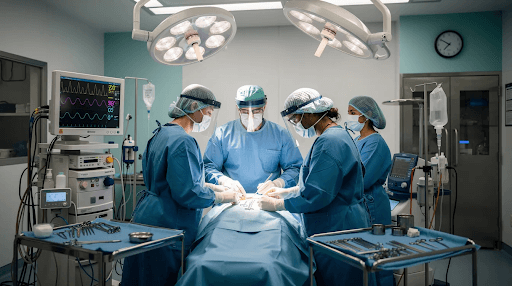
On the interventional side, cardiologists with additional procedural training can perform:
Pacemaker implantation for dogs and cats with symptomatic bradycardia or complete heart block
Balloon valvuloplasty for pulmonic stenosis, one of the most common congenital heart defects in dogs
Catheter-based occlusion of patent ductus arteriosus (PDA), a congenital condition in which a fetal blood vessel fails to close after birth
Electrical cardioversion for certain arrhythmias
These procedures require specialist expertise, specific equipment, and careful patient selection. Complications can occur, and outcomes depend heavily on case selection and operator experience(LeBlanc et al., 2019). They represent a genuinely different category of care from what is available in general practice.
Veterinary cardiology is also moving toward increasingly individualized, data-driven management. Research in personalized medicine approaches to companion animal cardiology is identifying biomarker and imaging thresholds that allow treatment to be tailored to the individual patient rather than applied by protocol alone(Rivas et al., 2023).
Heart Disease in Dogs: What Cardiologists Commonly Manage
Myxomatous mitral valve disease (MMVD) is the most common heart condition in dogs, particularly small and medium breeds. The mitral valve gradually degenerates over years, eventually leading to a regurgitant leak and, in advanced cases, congestive heart failure. The ACVIM has published consensus guidelines for MMVD management that define treatment thresholds based on echocardiographic measurements, cardiac biomarkers, and clinical staging(Keene et al., 2019). These guidelines are complex enough that their application often benefits from specialist input, particularly in determining when to start medication in a preclinical dog.
Research has shown that collaborative management between a primary care veterinarian and a cardiologist is associated with significantly longer survival times in dogs with congestive heart failure compared to primary care management alone(Lefbom & Peckens, 2016). Understanding predictors of congestive heart failure onset(Reynolds et al., 2012) and factors associated with recurrence of congestive signs(Franchini et al., 2021) has helped cardiologists refine monitoring and treatment protocols. Quantification of diuretic responsiveness is also now possible, allowing more targeted adjustment of medications in dogs with heart failure(Oyama & Adin, 2023).
Dilated cardiomyopathy (DCM) is a condition in which the heart muscle becomes weakened and enlarged, most commonly in large and giant breeds including Doberman Pinschers, Great Danes, and Irish Wolfhounds. Doberman Pinschers in particular carry a high genetic risk, and screening guidelines recommend annual echocardiography and Holter monitoring beginning at around two years of age in this breed, well before clinical signs develop(Wess et al., 2017). Detecting DCM in its occult, asymptomatic phase allows treatment to begin earlier, which the evidence supports as beneficial.
Atrial fibrillation is the most common significant arrhythmia in dogs and carries a meaningful risk of sudden cardiac death(Borgeat et al., 2021). Achieving optimal heart rate control in dogs with atrial fibrillation is an active area of research, with the ORCA study providing important data on treatment targets(Pedro et al., 2023). Management of atrial fibrillation requires careful monitoring and medication adjustment that typically benefits from specialist involvement.
Congenital heart disease (defects present from birth) are less common, but clinically important. A retrospective study identified pulmonic stenosis, subaortic stenosis, and patent ductus arteriosus as among the most frequently diagnosed congenital conditions in dogs(Lucina et al., 2021). Several of these conditions have interventional treatment options that can dramatically improve prognosis when performed early, making prompt specialist referral important.
Heart Disease in Cats: A Different Disease, Different Challenges
Feline heart disease presents differently from canine heart disease and is in many ways more diagnostically challenging. The most common condition is hypertrophic cardiomyopathy (HCM), in which the heart muscle becomes abnormally thickened. HCM affects a significant proportion of the cat population. The CatScan study found cardiomyopathy in approximately 15% of apparently healthy cats(Payne et al., 2015) , and the condition ranges from incidental and clinically silent to life-threatening.
Cats with HCM face two primary risks: congestive heart failure and arterial thromboembolism, which is a sudden, painful, and often fatal clot that obstructs blood flow to the hind limbs. Both conditions are discussed in detail in the ACVIM guidelines for feline cardiomyopathies(Luis Fuentes et al., 2020) and the comprehensive Kittleson and Côté reviews(Kittleson & Côté, 2021a);(Kittleson & Côté, 2021b).
A particularly important point for cat owners: cats are masters of masking illness. Many cats with significant HCM show no detectable signs at home until they present acutely in heart failure or with a thromboembolism. Because of this, echocardiographic screening is recommended in high-risk breeds such as Maine Coons, Ragdolls, and British Shorthairs, and in any cat with a murmur, gallop rhythm, or arrhythmia detected on physical examination.
When Should Your Pet See a Veterinary Cardiologist?
Your primary care veterinarian will guide referral decisions, but as an owner, knowing the general indications helps you advocate for your pet.
Referral to a cardiologist is typically recommended when:
A heart murmur is detected and echocardiography is needed to characterize the underlying condition and determine its stage
Your dog is a breed at elevated genetic risk for DCM — particularly Doberman Pinschers, Boxers, or Great Danes — and is due for screening
Your cat has a murmur, gallop rhythm, or arrhythmia on examination, or belongs to a high-risk breed
An arrhythmia has been detected on an ECG or Holter monitor
A congenital heart defect has been identified and interventional options need to be discussed
Your pet is in heart failure and medication management is becoming complex
A second opinion is sought on diagnosis, staging, or treatment
Symptoms such as exercise intolerance, coughing, labored breathing, fainting, or sudden collapse are present and cardiac cause has not been ruled out
One finding worth highlighting: advanced heart failure in dogs carries a significant mortality risk even with appropriate treatment(Beaumier et al., 2018). Waiting until a pet is in overt failure before pursuing specialist input is a missed opportunity. Earlier involvement at the stage when treatment decisions are being made about a preclinical dog with an enlarging heart, is when cardiologist input arguably adds the most value.
What to Expect From a Cardiology Appointment
A first cardiology visit typically lasts 60 to 90 minutes. The cardiologist will review all prior records and test results sent by your primary care veterinarian, take a detailed history, perform a thorough cardiovascular examination, and conduct or arrange echocardiography. Many specialist centers perform echocardiography at the same appointment.
Following the assessment, the cardiologist will provide a detailed written report to your primary care veterinarian covering the diagnosis, staging, treatment recommendations, monitoring plan, and prognosis. Ongoing management typically involves a collaborative arrangement between the cardiologist and your primary care vet, with the frequency of specialist rechecks depending on the condition and its rate of progression.
A Final Word: Advocating for Your Pet's Heart and how Vetmodo Can Help
Heart disease in pets is common, progressive, and in many cases manageable for years with the right treatment and monitoring. The difference between a dog or cat whose heart disease is caught and staged early with specialist input and one whose condition is only recognized in acute crisis can be significant.
If your primary care veterinarian recommends a cardiology referral, take it. If you have a breed at elevated cardiac risk and proactive screening has not been discussed, raise it. And if your pet is showing any of the signs described in this article: exercise intolerance, labored breathing, coughing, or fainting, contact your primary veterinarian promptly or go to a 24/7 ER rather than waiting to see if things improve.
To find cardiologists in your area, search vetmodo.com and create the connection today.
How often does a pet with heart disease need to see a veterinary cardiologist?
The frequency depends on the specific condition, its current stage, and how quickly it is progressing. A dog in the early preclinical stage of mitral valve disease may only need a cardiology recheck once a year. A dog in congestive heart failure may be seen every few months. Most ongoing day-to-day management is handled by your primary care veterinarian between specialist appointments, with cardiology rechecks scheduled at the intervals recommended in the specialist's report. This collaborative model - shared care between a cardiologist and a primary care veterinarian, is supported by research showing meaningfully longer survival times in dogs with congestive heart failure compared to primary care management alone. One specialist consultation is rarely sufficient for progressive cardiac conditions.
Pedro B, et al. Optimal rate control in dogs with atrial fibrillation (ORCA study). J Vet Intern Med. 2023. https://pubmed.ncbi.nlm.nih.gov/37128174/
Reynolds CA, et al. Prediction of onset of CHF in dogs (PREDICT study). J Vet Cardiol. 2012. https://pubmed.ncbi.nlm.nih.gov/22366568/
Rivas VN, et al. Personalized Medicine in Companion Animal Cardiology. Vet Clin North Am Small Anim Pract. 2023. https://pubmed.ncbi.nlm.nih.gov/37423841/
Wess G, et al. ESVC screening guidelines for DCM in Doberman Pinschers. J Vet Cardiol. 2017. https://pubmed.ncbi.nlm.nih.gov/28965673/
When your pet faces a complex health challenge—from a torn cruciate ligament to a hidden internal tumor—the expertise of a board-certified veterinary surgeon (DACVS) can make all the difference. Discover how these surgical specialists utilize advanced diagnostics and minimally invasive "keyhole" techniques to solve mobility issues and perform life-saving procedures that go beyond the scope of general practice.