How to Find the Best 24-Hour Emergency Vet Near You | VetModo
Veterinary Care Guide
How to Find the Best 24-Hour Emergency Vet Near You
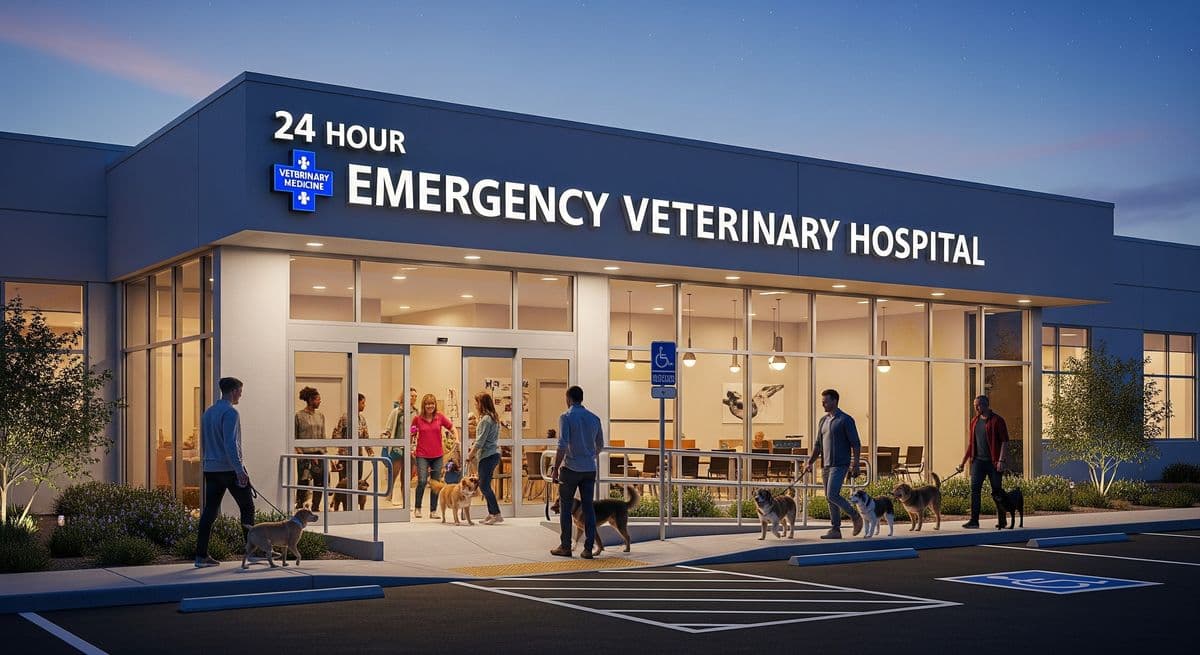
When your pet has an emergency, the last thing you want to be doing is searching frantically for the nearest vet. Knowing the difference between a general practice clinic, a standalone 24-hour ER, and a specialty-integrated emergency hospital, and having your closest options already saved in your phone, can mean the difference between fast, appropriate care and a costly, stressful delay. Here's everything you need to know before you ever need it.
Key takeaways
Not all emergency vet clinics are the same. There are three distinct tiers of care, and knowing which one to go to can save critical time.
For life-threatening emergencies, go directly to a 24-hour ER or 24-hour ER with specialty hospital. Do not delay by stopping at a general practice clinic unless it is the only option.
When in doubt about severity, call ahead. Most emergency clinics will allow a quick phone triage consultation, and dedicated teletriage services are also available.
Identify your nearest 24-hour emergency vet before an emergency happens. Having this information ready in advance removes a critical source of stress when every second counts.
Introduction: When Every Second Counts, Knowing Where to Go Changes Everything
When a sudden illness or injury strikes your pet, the first few minutes are a blur of fear, adrenaline, and urgent questions: Are they going to be okay? What should I do? And, critically - where do I go?
Trust you can count on
Vetmodo separates editorial guidance from paid clinic placement. Articles identify their authors, reviewers, publication dates, and supporting sources when that information is available.
For many pet owners, that last question is the one that causes the most delay. In a true emergency, delay costs lives. Knowing your local emergency veterinary care options before a crisis occurs is one of the most important things you can do as a pet owner. This guide will walk you through the types of emergency vet facilities available, how to assess the severity of your pet’s condition, what to look for when choosing a 24-hour ER, and how to prepare before an emergency ever happens.
Types of Emergency Vet Clinics: Not All 24-Hour Vets Are the Same
There are three distinct tiers of emergency care in veterinary medicine. Understanding the difference helps you get to the right facility without wasting critical time.
Tier 1: General Practice and Urgent Care Clinics
These are standard veterinary clinics and urgent care facilities that do not provide 24-hour staffed care. They can handle non-life-threatening conditions and minor ailments, typically by fitting them into a normal clinic schedule. They do not have overnight staffing for patient monitoring and are not equipped for true emergencies.
These clinics can be appropriate for mild or non-urgent issues, and can refer to higher-level care if needed following initial triage. However, they are generally not appropriate for severe or potentially life-threatening emergencies. If a general practice is the only option immediately available, it may serve as a temporary stabilization stop — but the destination should still be a 24-hour facility.
⚠ Important: A common search engine trap Many general practice veterinary clinics optimize their websites with pages about emergency care, which can cause them to appear prominently in searches for '24-hour vet near me' or 'emergency vet nearby.' This is widespread and can create a false impression of around-the-clock availability at first glance. Always verify hours of operation and overnight staffing before assuming a clinic offers true 24-hour emergency care.
These are fully staffed, around-the-clock emergency facilities capable of treating a wide range of urgent and critical cases in dogs and cats. They provide continuous overnight monitoring and hospitalization, and are equipped for advanced interventions including oxygen therapy, transfusion medicine, high-level pain management, and emergency surgery.
Some cases presenting to these facilities may still need referral to higher-level care, but for the majority of genuine pet emergencies, a standalone 24-hour ER is the appropriate destination.
Tier 3: 24-Hour Emergency Departments Within Specialty Hospitals
The highest level of emergency veterinary care combines a 24-hour emergency department with an integrated specialty hospital. These facilities generally have on-site access to board-certified specialists in areas such as internal medicine, surgery, cardiology, neurology, and critical care — available for consultation and advanced procedures when the emergency team needs additional expertise.
Within this tier, look for facilities with VECCS certification from the Veterinary Emergency and Critical Care Society (VECCS): a designation that certifies a facility’s capability to perform advanced diagnostics and treatment, provide specialist consultation, and maintain high-level patient monitoring standards.(VECCS, 2024)
Is It a Pet Emergency? How to Assess the Severity of Your Pet’s Condition
Choosing the right level of care begins with accurately assessing the urgency of the situation. The American Veterinary Medical Association (AVMA) and the American Animal Hospital Association (AAHA) both provide guidance on recognizing true pet emergencies.(AVMA, 2024);(AAHA, 2024)
Conditions Appropriate for Urgent Care or General Practice
These conditions are generally non-life-threatening and may be appropriate for an urgent care clinic or a same-day general practice appointment:
Ear infections
Sudden limping without severe pain or inability to bear weight
Mild, isolated diarrhea in an otherwise well animal
Sneezing or mild nasal discharge
Minor skin irritation or small superficial wounds
Conditions That Require Immediate 24-Hour Emergency Care
The following signs constitute a genuine emergency requiring immediate presentation to a 24-hour ER facility. Do not wait for a regular appointment.(AVMA, 2024)
⚠ Go to a 24-hour ER immediately if your pet shows any of the following:
Major trauma of any kind (hit by a car, fall from height, animal attack)
Difficulty breathing, labored breathing, or open-mouth breathing in a cat
Choking or persistent gagging
Sudden onset lethargy, collapse, or pale/white/blue gums
Bloating or distension of the abdomen
Seizures
Known or suspected toxin exposure
Difficulty or inability to urinate, especially in male cats
Straining to pass stool with no production
Acute vomiting and/or diarrhea, particularly with blood
Bleeding that does not stop or bleeding from unusual sites
Heatstroke or heat stress
Acute severe pain or sudden onset of distress
Inability to walk or sudden loss of coordination
Suspected or confirmed fractured bones
Eye injuries or sudden changes in vision
Loss of consciousness or unresponsiveness
Refusal to eat or drink for more than 24 hours
Difficulty giving birth or prolonged labor
Sudden severe flare-up of a known serious underlying disease
If you are unsure whether your pet’s condition constitutes a true emergency, call ahead. Most 24-hour emergency clinics will allow a brief phone triage consultation with a nurse or veterinarian. Dedicated teletriage services are also available for remote guidance. When in doubt, err on the side of caution and have your pet evaluated — a delay in care allows the disease process to progress, sometimes rapidly.(AAHA, 2024)
What to Look for in a 24-Hour Emergency Vet: Choosing the Best Option Near You
In areas with limited veterinary infrastructure, pet owners may have only one or two 24-hour emergency options. In more urban areas, there may be several — and the ability to be selective matters. Access to quality emergency veterinary care is an increasingly recognized concern across the profession.(AAHA Trends, 2024)
Factors to consider when evaluating a 24-hour emergency vet near you:
Wait times: ER wait times can vary significantly. In non-critical situations, reviewing typical wait times at local facilities in advance can help you make a more informed choice.
Reviews and reputation: Online reviews can offer meaningful insight into communication quality, staff compassion, and overall experience. Look for patterns rather than isolated comments.
Access to specialist care: A 24-hour ER integrated with a specialty hospital provides access to board-certified specialists in surgery, internal medicine, cardiology, neurology, and critical care — a significant advantage for complex or multi-system emergencies.
VECCS certification: VECCS facility certification is an objective indicator of a clinic’s capability to provide advanced testing, treatment, and monitoring.(VECCS, 2024)
Financial transparency and spectrum of care: Emergency veterinary care is expensive, and sticker shock is common. Look for clinics whose staff proactively communicate costs and are willing to discuss a spectrum of treatment options that account for your financial situation. Evidence-based guidance on communicating spectrum of care options now exists to help veterinary teams navigate these conversations constructively.(Evason et al., 2025);(JAVMA, 2025)
Payment plans and financing: Many emergency clinics offer financing options such as CareCredit or in-house payment plans. Confirming this in advance, before an emergency, removes a critical decision point from an already stressful moment.
Communication and rapport: An emergency visit is rarely a calm experience. You should feel that the staff have your pet’s best interests at heart and are communicating clearly and compassionately. Trust your instincts about the environment and the team.
How to Prepare for a Pet Emergency Before It Happens
The single most effective thing you can do to reduce stress during a pet emergency is to identify your nearest 24-hour emergency vet before you ever need one. When panic sets in, searching for a clinic from scratch wastes critical minutes. Having that information already in your phone removes one of the most stressful variables from the equation.
Steps to take now, before an emergency occurs:
Identify the nearest standalone 24-hour emergency vet clinic to your home.
Identify the nearest 24-hour emergency department within a specialty hospital - this is your highest-level local option.
Check their hours, confirm they genuinely provide overnight staffing, and note their address and phone number.
Review their payment and financing options.
Save both locations in your phone contacts for immediate access.
Use VetModo.com to search for 24-hour emergency veterinary hospitals and specialty centers in your area. Filter by services offered, read reviews, and confirm facility credentials, all before a crisis puts you under pressure.
Final Thoughts: The Best 24-Hour Vet Near You Is the One You’ve Already Found
Pet emergencies are unpredictable, but your response to them doesn’t have to be. Understanding the tiers of emergency veterinary care, knowing which signs demand immediate attention, and having a plan in place before anything goes wrong are the three things that will most reliably get your pet to the right help at the right time. VetModo.com is here to help you prepare and navigate this difficult time.
The best 24-hour emergency vet near you isn’t necessarily the closest one: it’s the one that is right for your pet’s specific needs, that you’ve already vetted, and whose address is already saved in your phone.
Frequently asked questions
What should I expect when I arrive at a 24-hour emergency vet?
Emergency veterinary clinics use a triage system — meaning patients are prioritized by medical severity, not by order of arrival. A pet that is stable may wait while a critical case is seen first. This can be frustrating in a stressful moment, but it means that if your pet were the critical one, they would be seen immediately. At intake, a staff member will assess your pet's condition, take a brief history, and assign a triage priority. From there, you will typically be kept informed of your pet's status while the team works.
How much does a 24-hour emergency vet visit cost?
Emergency veterinary care is significantly more expensive than routine care, and costs vary widely depending on the condition, the treatments required, and the facility. An initial emergency exam and basic diagnostics may range from a few hundred dollars, while hospitalization, surgery, or intensive care can reach several thousand. Most facilities will provide an estimate before proceeding with treatment. Ask about payment plan options and financing such as CareCredit if cost is a concern — many clinics accommodate this, and good emergency teams will discuss a range of treatment options that account for your situation.
Does pet insurance cover emergency vet visits?
Most pet insurance policies do cover emergency care, but it is important to understand that virtually all plans operate on a reimbursement model, meaning you pay the clinic upfront and submit a claim afterward (though occasional companies will pay up-front with certain hospitals). Pet insurance does not typically function like human health insurance at the point of care. Confirm your policy's coverage limits, deductibles, and exclusions before an emergency occurs so there are no surprises.
Do all 24-hour emergency vets see exotic pets?
No, although some will. Many 24-hour emergency facilities are equipped only for dogs and cats. If you own a rabbit, bird, reptile, small mammal, or other exotic species, confirm explicitly that the facility has staff trained and equipped to treat your specific animal before making it your designated emergency clinic.
Medical disclaimer
This article is educational and does not replace advice, diagnosis, or treatment from a licensed veterinarian. Contact your veterinarian with questions about your pet's health.