Veterinary Rehabilitation Therapist: What They Do and When Your Pet Needs One | Vetmodo
Veterinary Care Guide
What is a Certified Veterinary Rehabilitation Therapist and When Do I Need One?
When a pet comes home from surgery or starts struggling to get up in the morning, most owners are told to "restrict activity and rest." But rest alone isn't a treatment plan and for many pets, it may actually make things worse. Cartilage, muscle, tendons, and ligaments all can begin to deteriorate measurably within days of disuse. Veterinary rehabilitation therapists exist precisely to interrupt that process and promote faster recovery.
Written by Vetmodo Editorial Team
Key takeaways
Veterinary rehabilitation is one of the fastest-growing branches of veterinary medicine, with documented benefit for orthopedic and neurological conditions
Cartilage, muscle, tendons, ligaments, and bone all undergo measurable atrophy when a limb is not used. Rehabilitation directly counters this process and is most effective when started early.
Rehabilitation is not only for elite athletes or dogs recovering from surgery. Senior pets with osteoarthritis, pets with neurological conditions, and cats with mobility challenges all benefit from guided therapy.
Cats are frequently underserved by rehabilitation medicine, despite experiencing the same conditions as dogs. Feline-specific rehabilitation protocols are an emerging and evidence-supported area of practice.
Introduction: The Veterinary Equivalent of Physical Therapy
For humans, physical therapy is a standard part of recovering from surgery or managing chronic pain. In the veterinary world, this focused field is known as —a specialized area within veterinary medicine that integrates with traditional veterinary practices. It focuses on restoring function, improving a pet's mobility, and enhancing the quality of life for animals through non-invasive therapies, with the goal to relieve pain, reduce pain, and provide pain relief for various injuries and conditions.
Trust you can count on.
Articles identify their authors, reviewers, publication dates, and supporting sources when that information is available.
Veterinary rehabilitation is an essential branch of modern medicine that bridges the gap between surgical intervention and a return to normal activity (Marcellin-Little et al., 2015). It is beneficial for all species, including dogs, cats, rabbits, goats, and horses, supporting whole-body health and function.
What is a Rehabilitation Veterinarian?
A certified rehabilitation practitioner is a veterinarian, licensed veterinary technician, or rarely a human physical therapist (with veterinary oversight), who has undergone advanced, post-graduate training in physical therapy techniques specifically for animals. The practice of veterinary rehabilitation requires proper accreditation and is performed by trained professionals to ensure safety and effectiveness. In most jurisdictions, if a pet is treated by someone other than their regular veterinarian, that practitioner coordinates with the primary veterinarian to ensure continuity of care. One of the most recognized credentials is the Certified Canine Rehabilitation Therapist (CCRT), provided by the Canine Rehabilitation Institute.
These professionals possess specialized clinical reasoning skills to assess musculoskeletal issues, neurological deficits, and indications such as lameness, pain, or mobility deficits before designing a custom manual therapy plan (Edge-Hughes et al., 2023).
Common Modalities in Veterinary Rehabilitation
Rehab specialists utilize a variety of “multimodal” tools to manage pain, promote healing, and assist with recovery (Ihrke, 2023):
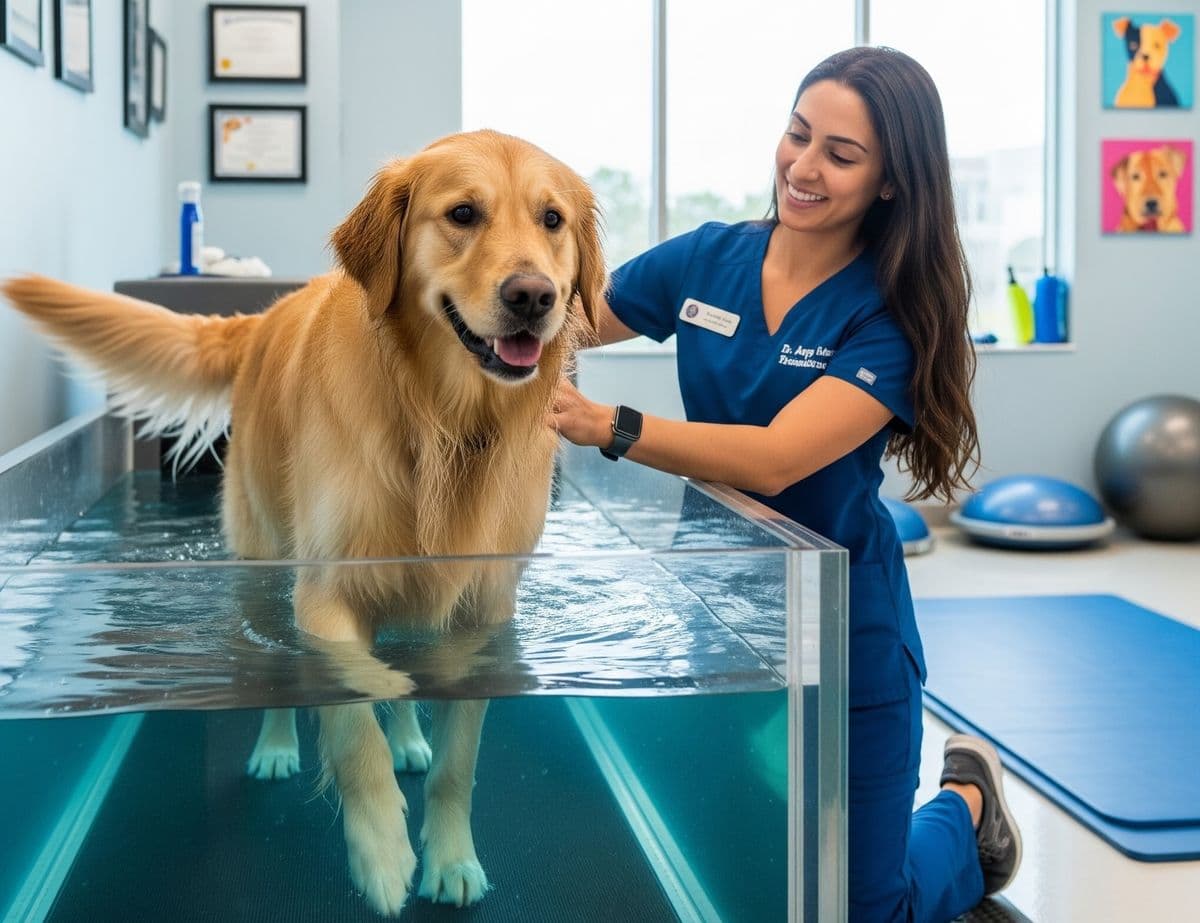
Hydrotherapy: Using underwater treadmills or swimming to provide low-impact resistance training. These modalities help reduce stress on joints, promote muscle conditioning, and improve endurance.
Photobiomodulation (Laser Therapy): Using specific wavelengths of light to reduce inflammation, relieve pain, and accelerate tissue repair, particularly effective in chronic pain and post-surgical cases (Alagić et al., 2025).
Manual Therapy: Targeted massage, stretching, and joint mobilization to support tissues and body function.
Therapeutic Exercise: Specialized movements using balance balls or obstacles to build core strength, endurance, and coordination.
Regenerative Medicine: Integrating advanced treatments like Platelet-Rich Plasma (PRP) or stem cell therapy to heal damaged joints, tendons, and other tissues (Carr, 2023; Bharti et al., 2024).
When Should I Seek a Rehabilitation Consultation?
Rehabilitation is not just for elite “canine athletes” in sports medicine (Levine et al., 2020). It is a critical component of care for any pet facing mobility challenges, and is indicated for a variety of conditions:
Post-Surgical Recovery Rehab is vital for pets recovering from orthopedic procedures like TPLO (ACL repair), or tendon/ligament and bone injuries. Early intervention helps manage perioperative pain, reduces risk of complications, and ensures the limb regains full range of motion (Flaherty, 2019).
Management of Osteoarthritis and Hip Dysplasia For senior pets or those with hip dysplasia, rehab focuses on “Movement is Medicine.” A tailored plan can slow the progression of arthritis, relieve pain, and improve daily comfort through low-impact strengthening (Flaherty, 2023).
Neurological Conditions Pets with “slipped discs” (intervertebral disc disease/IVDD) or degenerative myelopathy benefit from exercises that stimulate the nervous system, assist with mobility, and help maintain muscle mass (Gamble, 2022).
Lameness and Mobility Deficits Assessment and treatment of lameness, as well as other mobility issues, are key indications for rehabilitation.
Feline Physiotherapy Rehab isn’t just for dogs! Cats suffer from many of the same conditions, including osteoarthritis and fractures. Modern feline-specific techniques and exercises can significantly improve mobility and healing in our feline companions (Goldberg, 2025a; Goldberg, 2025b).
Weight Loss and Endurance Underwater treadmill therapy and structured exercise programs assist with weight loss and build endurance, supporting overall health.
The Importance of Evidence-Based Care
Veterinary rehabilitation is grounded in clinical data. Research consistently shows that pets receiving professional physical therapy recover faster and more completely than those managed with crate rest alone (Millis & Ciuperca, 2015). Prolonged periods of rest can negatively affect tissues and bone, making early and continued mobilization beneficial for healing and reducing the risk of future injury. Structured programs help prevent muscle atrophy during restricted activity, and targeted therapies accelerate tissue repair and stimulate blood flow.
Getting an Appointment
Most rehabilitation consultations can be accessed through two pathways: a referral from your primary care veterinarian, or direct self-referral to a rehabilitation practice. Many rehabilitation therapists welcome direct bookings from pet owners without a formal referral, though your primary care veterinarian's records and any recent imaging will be needed to inform the initial assessment. If you are unsure where to start, asking your primary care veterinarian for a recommendation is a reasonable first step. If rehabilitation is not routinely offered or discussed at your practice, it is entirely appropriate to ask whether your pet might benefit. (Marcellin-Little et al., 2015)
To find a certified therapist who can develop a custom mobility plan for your pet, useVetmodo.com to locate nearby rehabilitation specialists and clinics equipped with these tools in your area.
Final Thoughts
Whether your pet is a senior struggling to stand or a young dog recovering from injury or surgery, a rehabilitation specialist provides the biological tools and physical support needed for a successful recovery. By prioritizing function and healing, you can help your pet return to the activities they love most.
As always, thank you for reading and we hope you found this article helpful.
Frequently Asked Questions
How does veterinary rehabilitation speed up recovery after surgery?
Professional rehabilitation is significantly more effective than “crate rest” alone. The rehabilitation process involves multiple stages, including in-clinic treatments and specific at-home exercises performed by clients to maximize recovery. By using targeted manual therapies and controlled exercises, a specialist can manage post-operative pain, prevent muscle wasting, and ensure that a pet regains a full range of motion. Evidence shows that pets receiving professional physical therapy after orthopedic or spinal surgery recover faster and more completely (Millis & Ciuperca, 2015).
Can rehabilitation help senior pets with arthritis?
Yes. For senior pets, “Movement is Medicine.” Regular appointments and active client involvement in the therapy process are beneficial for maintaining progress and ensuring the best outcomes. A rehabilitation specialist develops low-impact strengthening plans, often including hydrotherapy and laser therapy, to improve joint comfort and slow the progression of osteoarthritis. These non-invasive modalities are essential for maintaining a high quality of life and mobility in aging pets (Flaherty, 2023).
What is an underwater treadmill, and is it better than swimming?
The underwater treadmill allows for “buoyancy-assisted” walking, which reduces the weight and impact on painful joints while providing gentle resistance to build muscle. Unlike swimming, which can be stressful or physically taxing for some pets, the treadmill allows for precise control of speed and water height, making it a superior tool for controlled gait training and neurological recovery (Ihrke, 2023).
Written by
Vetmodo Editorial Team
Medical disclaimer
This article is educational and does not replace advice, diagnosis, or treatment from a licensed veterinarian. Contact your veterinarian with questions about your pet's health.