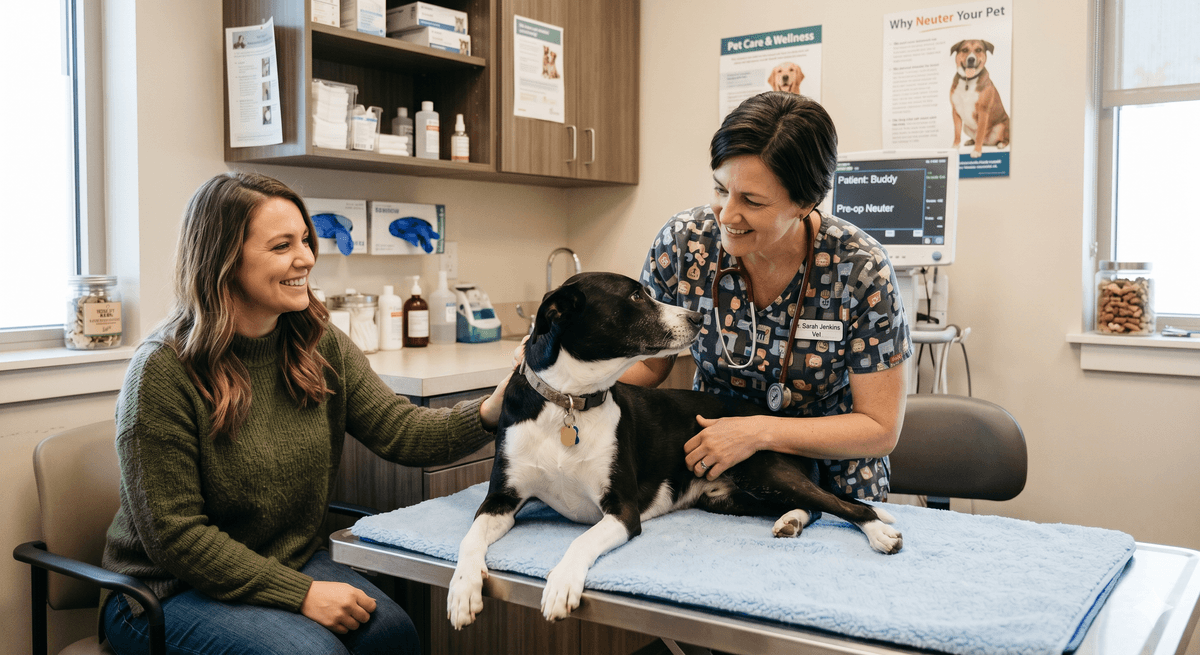
Choosing to neuter your male dog, medically termed an orchiectomy or castration, is one of the most important decisions a pet owner can make. This routine surgical procedure removes the testes, the organs responsible for producing sperm and the primary male sex hormone, testosterone. Dog neutering is a standard, safe procedure, but the optimal timing and context for the surgery deserve careful consideration. This guide provides an evidence-based overview of dog neutering, including health benefits, behavioral effects, breed-specific timing, and options for affordable care.
The most immediate reason for dog neutering is to prevent unwanted litters, but the benefits extend well beyond population control. Leaving a male dog intact carries significant, progressive health and behavioral risks. (Bain, 2020)
The ethical implications of intact male dogs are substantial. An intact male, especially one with outdoor access, can father dozens of puppies, directly contributing to the crisis of pet overpopulation and the overcrowding of animal shelters. Dog neutering is one of the most impactful steps a pet owner can take to reduce the burden on rescue organizations. (Phillips et al., 2018)
The health risks of leaving a male dog intact increase considerably with age. (Kustritz, 2007)
- Benign Prostatic Hyperplasia (BPH): Over 80% of intact male dogs develop BPH by age six. This condition causes the prostate gland to enlarge, leading to difficulty urinating, constipation, and blood in the urine. While not cancerous, BPH can significantly impact quality of life.
- Prostatitis and Prostatic Abscesses: An enlarged prostate is highly susceptible to severe, often life-threatening bacterial infections (prostatitis) and abscesses. These conditions are intensely painful and require prolonged antibiotic courses and sometimes aggressive surgery.
- Testicular Cancer: Dog neutering is 100% effective in eliminating the risk of testicular tumors, which are common in older intact males. Although most are benign, they can grow large and may become malignant.
- Perineal Hernias: Hormonal influences in older intact males weaken the pelvic musculature, predisposing them to hernias in which abdominal contents — such as the rectum or bladder — can protrude under the tail. These hernias are debilitating and require complex, expensive surgical repair.
Testosterone drives powerful natural behaviors that are frequently incompatible with domestic life. (Bain, 2020)
- Roaming: Intact male dogs have a strong drive to find a mate, often leading them to escape the yard, jump fences, or bolt through open doors — placing them at serious risk of getting lost, being struck by a vehicle, or being injured in fights.
- Aggression: Testosterone plays a key role in dominance-related and inter-male aggression. Dog neutering often significantly reduces these dangerous behaviors, making dogs safer and easier to train.
- Urine Marking: Intact males are highly motivated to urine mark household furniture, doorways, and other surfaces to establish territory and signal their presence to potential mates.
For decades, standard veterinary practice recommended neutering puppies as young as six months of age. However, recent research has significantly challenged this one-size-fits-all approach, revealing that neutering timing matters considerably — particularly for long-term joint health and cancer risk. (Hart et al., 2024; Kustritz, 2007)
Sex hormones are essential for normal musculoskeletal development and immune function. Removing them too early in life — particularly in large and giant breed dogs — can have serious long-term consequences. (Kutzler, 2020)
Testosterone plays a critical role in closing the growth plates in long bones. If a dog is neutered before reaching physical maturity, these growth plates may close late, producing abnormal skeletal growth patterns that may increase the risk of:
- Hip Dysplasia: Abnormal conformation of the hip joints, predisposing the dog to arthritis.
- Cranial Cruciate Ligament (CCL) Tears: The canine equivalent of an ACL tear — a common and debilitating knee injury that often requires surgery.
- Early-Onset Osteoarthritis: Progressive joint degeneration that can impair mobility for the remainder of the dog's life.
Evidence-Based Guideline: For most large-breed dogs (expected adult weight over 50–60 lbs), current evidence recommends waiting to neuter until skeletal maturity, typically between 12 and 18 months of age, though pros and cons should be discussed with your veterinarian. (Hart et al., 2024)
The relationship between dog neutering and cancer is nuanced and varies by breed. While neutering eliminates testicular cancer entirely, removing protective sex hormones too early may paradoxically increase the risk of other, more aggressive cancers in certain breeds. (Torres de la Riva et al., 2013) These include:
- Osteosarcoma (Bone Cancer): Increased risk reported in certain large breeds such as Rottweilers and Golden Retrievers neutered before 12 months of age.
- Hemangiosarcoma: A deadly vascular cancer, with elevated risk documented in Golden Retrievers neutered before physical maturity.
- Lymphoma: Cancer of the lymphatic system, with breed-specific associations reported.
Small-breed dogs generally reach skeletal maturity much sooner, typically around 6–9 months of age. The musculoskeletal risks associated with early dog neutering are comparatively low in this size category. Neutering a small-breed dog around or before adolescence (approximately 6 months) therefore remains the standard recommendation.
This is the size category in which individualized decision-making is most critical. Many veterinarians now recommend delaying dog neutering until skeletal maturity, typically 12 to 18 months, in order to maximize joint health, provided the risks of maintaining intact status are appropriately managed in the interim. (Hart et al., 2024)
Population Control & Ethics
Goal: 100% prevention of unwanted litters.
- Timing: Best performed before puberty, typically between 6 and 9 months of age.
- Evidence: Addressing the ethical imperative and reducing shelter euthanasia rates (Phillips et al., 2018).
Prevention of Testicular Cancer
- Goal: 100% elimination of testicular cancer risk.
- Timing: Effective at any age, as removing the testes eliminates the site where these tumors develop (Kustritz, 2007).
Prostate Health (BPH & Prostatitis)
- Goal: Over 80% reduction in Benign Prostatic Hyperplasia (enlarged prostate) and secondary infections.
- Timing: Highly impactful even if done later in life, as the surgery removes the testosterone driving the enlargement (Kustritz, 2007).
Managing Behavioral Issues
- Goal: Significant reduction in sex-hormone-driven behaviors like roaming and urine marking.
- Timing: Most effective when performed before 12 months, before these behaviors become learned or reinforced habits (Bain, 2020).
Orthopedic & Joint Health
- Goal: Minimize long-term risks of Hip Dysplasia and Cranial Cruciate Ligament (CCL) tears.
- Timing: Critical to wait for skeletal maturity, typically 12–18 months (especially in large breeds), to allow proper closure of growth plates.
Evidence: Backed by breed-specific research regarding joint disorders and early hormonal removal (Torres de la Riva et al., 2013).
Financial constraints should never be a barrier to essential care. Affordable options include:
- Low-Cost Spay/Neuter Clinics: Dedicated non-profit clinics with significantly reduced fees.
- Animal Shelters: Organizations like the ASPCA frequently host mobile or pop-up clinics.
- Government Voucher Programs: Municipal agencies often offer vouchers to qualifying owners.
- The SpayUSA Network: A searchable national database to locate affordable local providers.
The ideal time to neuter your dog depends on his size, breed, lifestyle, and individual risk factors. Use these evidence-based guidelines as a foundation, but the most important step is to have an open, detailed conversation with your veterinarian.
Looking for options for dog neutering near you? Vetmodo.com can help you find the perfect fit for you and your dog. Search by primary care veterinarians, low-cost clinics, and click the “spay/neuter” tag to narrow search results.
We hope you found this article helpful, thanks for reading!