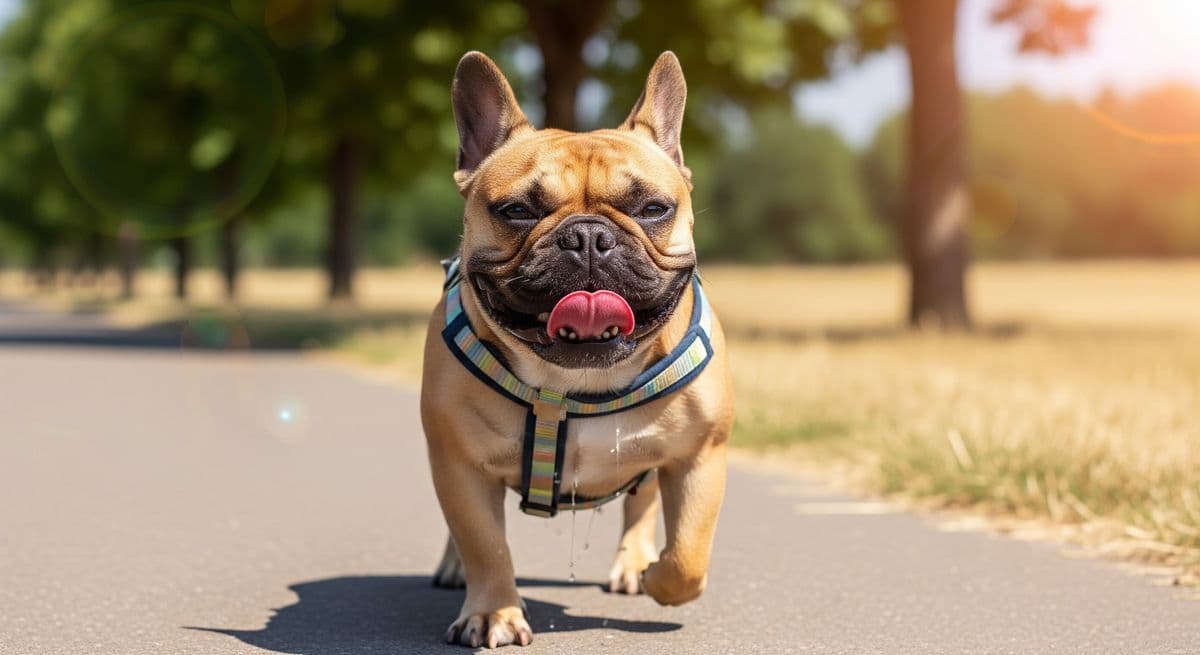
It's Not Just Hot Cars: Dog Heatstroke Risks, Warning Signs & Emergency Response
VE
Vetmodo Editorial TeamReviewed by Jonathan Schaefer · May 21, 2026
Key Takeaways
•Heatstroke is defined by a core body temperature above 41°C (105.8°F) with central nervous system dysfunction. Quick intervention increases the chance of survival.
•Dogs do not sweat like humans. They rely almost entirely on panting for cooling — a mechanism that fails rapidly in high heat and humidity, particularly in high-risk breeds.
•Exertional heatstroke caused by exercise or play, is a greater threat than cars in many regions. Even moderately warm days can be dangerous during intense activity.
•Flat-faced (brachycephalic) breeds and dogs with laryngeal paralysis face the greatest thermoregulatory risk due to structural airway limitations.
•Never use ice or ice-cold water to cool a dog in heatstroke. Room-temperature water with airflow from a fan is the evidence-backed first aid approach.
Heatstroke Introduction: Why Dogs Are More Vulnerable to Heat Than You Might Think
Imagine running hard on a warm afternoon, but with no ability to sweat, wearing a fur coat, and breathing through a narrowed straw. That’s closer to your dog’s physiological reality on a summer day than most owners realize. Veterinary medicine and leading veterinary organizations emphasize that understanding this risk is the first step in prevention.
Unlike humans, who dissipate heat primarily through sweating across the skin, dogs are bio-engineered differently:
Panting is Cooling: Dogs rely almost entirely on panting to cool themselves. This process facilitates evaporative cooling via the respiratory tract.
Limited Sweat Glands: While dogs do have sweat glands located primarily in their paw pads and around their noses, these play a minimal role in thermoregulation compared to the widespread sweating seen in humans.
Mild Overheating Can Escalate Quickly: When environmental heat or physical exertion exceeds a dog’s ability to dissipate that heat, a critical state of hyperthermia develops. (Bruchim et al., 2017)
The Danger Zone: What is Heatstroke?
Heatstroke in dogs is medically defined as a core body temperature above 41°C (105.8°F) accompanied by central nervous system dysfunction. It is a life-threatening condition that can cause rapid organ damage and multiple organ failure.
The clinical reality is stark:
High Mortality: Despite early and appropriate body cooling and intensive supportive treatment, the mortality rate for severe heatstroke can be approximately 50%, a figure comparable to human heatstroke victims.
A Systemic Cascade: The resulting internal damage involves the direct cytotoxicity of heat, acute circulatory failure, and widespread inflammatory responses.
Critical Complications: This cascade can culminate in disseminated intravascular coagulation (DIC), systemic inflammatory response syndrome, and multiple organ dysfunction. (Romanucci & Salda, 2013); (Bruchim et al., 2017)
Understanding which dogs are most at risk, how to recognize the warning signs early, and what to do in the critical first minutes of an emergency can make the difference between .
Frequently asked questions
Is heatstroke only a risk if my dog is left in a hot car?
No. While parked vehicles are extremely dangerous, exertional heatstroke caused by exercise or vigorous play is a greater threat in many regions. (Hall et al., 2020) Even on moderately warm days, high-intensity activity can cause a dog’s core temperature to rise faster than they can dissipate it through panting. This is why limiting physical exertion during the warmest parts of the day is essential — particularly for high-risk breeds. (Tripovich et al., 2023)
Should I give my dog ice or ice-cold water to cool them down fast?
No - room temperature to slightly cool water is best. Very cold water causes peripheral vasoconstriction, the tightening of blood vessels near the skin surface, which may trap core heat inside the body and slows the cooling process. The evidence-supported approach is room-temperature water applied to the body combined with airflow from a fan to promote evaporative cooling. (Hemmelgarn & Gannon, 2013); (Hall et al., 2023); (Parnes et al., 2023)
Does airway surgery improve a brachycephalic dog’s ability to handle heat?
Yes, but these dogs remain at elevated risk. Airway (or BOAS) surgery corrects anatomical restrictions such as narrowed nostrils and an elongated soft palate, significantly improving airflow and quality of life. However, it only partially alleviates the thermoregulatory deficiency. (Žgank et al., 2023) Flat-faced dogs, even those that have undergone surgery, still possess shorter and less efficient airways than non-brachycephalic breeds. (Davis et al., 2017) They must continue to be managed as high-risk patients in warm weather.
What does “brick-red gums” mean and why is it a warning sign?
In a healthy dog, the gums are a moist salmon-pink color. Bright red or brick-colored gums in a hot, panting dog indicate vasodilation - the body’s attempt to push blood to the skin surface to release heat. This is an early sign that the dog’s thermoregulatory system is working at maximum capacity, and often seen in cases of heat stroke or even sepsis. If the gums transition to pale, white, gray, or blue, this indicates cardiovascular compromise and circulatory failure and constitutes an immediate emergency. (Bruchim et al., 2017)
Citations
Azeez OM, et al. Effect of heat stress on vital and hematobiochemical parameters of healthy dogs. Vet World. 2022.
Beard S, et al. Epidemiology of heat-related illness in dogs under UK emergency veterinary care in 2022. Vet Rec. 2024.
Bruchim Y, et al. Pathophysiology of heatstroke in dogs – revisited. Temperature (Austin). 2017.
Bruchim Y, et al. Hemostatic abnormalities in dogs with naturally occurring heatstroke. J Vet Emerg Crit Care. 2017.
Caldas GG, et al. Heat stroke in dogs: Literature review. Vet Med (Praha). 2022.
Davis MS, et al. Effect of brachycephaly and body condition score on respiratory thermoregulation of healthy dogs. J Am Vet Med Assoc. 2017.
Ekenstedt KJ, et al. Canine Brachycephaly: Anatomy, Pathology, Genetics and Welfare. J Comp Pathol. 2020.
Hall EJ, et al. Dogs Don’t Die Just in Hot Cars — Exertional Heat-Related Illness Is a Greater Threat to UK Dogs. Animals (Basel). 2020.
Hall EJ, et al. Risk Factors for Severe and Fatal Heat-Related Illness in UK Dogs. Vet Sci. 2022.
Hall EJ, et al. Surveillance of heat-related illness in small animals presenting to UK veterinary practices 2013–2018. Open Vet J. 2022.
Hall EJ, et al. Cooling Methods Used to Manage Heat-Related Illness in Dogs. Vet Sci. 2023.
Hemmelgarn C, Gannon K. Heatstroke: thermoregulation, pathophysiology, and predisposing factors. Compend Contin Educ Vet. 2013.
Hemmelgarn C, Gannon K. Heatstroke: clinical signs, diagnosis, treatment, and prognosis. Compend Contin Educ Vet. 2013.
Koch DA, et al. Thermoregulation as a factor in the pathophysiology of BOAS in dogs. Schweiz Arch Tierheilkd. 2025.
Moon KE, et al. Environmental Heat Exposure Among Pet Dogs in Rural and Urban Settings in the Southern United States. Front Vet Sci. 2021.
Parnes SC, et al. A Randomized Cross-Over Study Comparing Cooling Methods for Exercise-Induced Hyperthermia in Working Dogs. Animals (Basel). 2023.
VE
Written by
Vetmodo Editorial Team
The information on this website is for educational purposes only and does not constitute veterinary medical advice, diagnosis, or treatment. Always consult a licensed veterinarian regarding your pet's health. Reliance on any information provided by Vetmodo is solely at your own risk.
Which Dogs Are Most at Risk for Heatstroke? Key Risk Factors Explained
While any dog can develop heatstroke, certain anatomical and physiological factors significantly impair a dog’s ability to cool itself. Identified risk factors include:
Hot and highly humid environments
Excessive physical activity
Obesity, large body weight (>15 kg)
Certain breeds (flat-faced dogs)
Upper airway disease/obstruction, including laryngeal paralysis
Prolonged seizures
Heat exposure during extremely hot or hot weather, especially in the warmer months.
Senior dogs, dogs with heart disease, and those exposed to a humid environment or high temperatures are at higher risk, greater risk, and increased risk for heatstroke. Lack of prior heat acclimatization and reduced physical fitness are also associated with decreased survival (Bruchim et al., 2017).
Brachycephalic Breeds: When Anatomy Becomes a Liability
Breeds such as French Bulldogs, English Bulldogs, and Pugs possess severely restricted airways due to Brachycephalic Obstructive Airway Syndrome (BOAS). This anatomical limitation makes panting far less efficient as a cooling mechanism. (Ekenstedt et al., 2020); (Davis et al., 2017) (Koch et al., 2025)
Research confirms that dogs that have not undergone BOAS corrective surgery struggle significantly more to move enough air to facilitate effective cooling. (Žgank et al., 2023) The physiological cycle that develops is particularly dangerous: overheating leads to increased panting, which causes swelling of already-narrowed upper airways, which impairs heat excretion, which worsens panting further, which worsens airway swelling and constriction. This vicious cycle can escalate rapidly and become fatal.
Owners of brachycephalic dogs are commonly advised to discuss airway corrective surgery with their veterinarian or a board-certified surgeon. While BOAS surgery significantly improves airflow and quality of life, it only partially alleviates thermoregulatory deficiency: these dogs must still be managed as high-risk patients in warm weather (Žgank et al., 2023).
Laryngeal Paralysis: The Hidden Heat Risk in Older Dogs
Laryngeal paralysis (“lar par”) is a condition in which the cartilages of the larynx fail to open properly during inhalation. It is most commonly seen in older Labrador Retrievers, though any breed can be affected.
Owners may notice a change in bark quality, loud or raspy breathing (stridor), or heavy panting even in cool environments. Because the airway cannot fully open to facilitate heat exchange, these dogs are at significantly elevated risk during warm weather (MacPhail, 2020). Veterinary consultation is strongly recommended for any dog showing these signs, particularly ahead of summer.
Evidence-Based Strategies to Prevent Dog Heatstroke
Managing your dog’s environment and exercise routine is the most effective way to prevent heat-related illness. (Hemmelgarn & Gannon, 2013)
Exertional heatstroke is a greater threat than parked cars: Limit strenuous activity during the warmest parts of the day. A UK-based study found that exertional heatstroke caused by exercise or vigorous play, was a greater threat than heat from parked cars in many regions. Even on moderately warm days, high-intensity activity can cause a dog’s core temperature to rise faster than they can dissipate through panting. (Hall et al., 2020); (Tripovich et al., 2023)
Surface awareness: Asphalt and dark pavement retain significant heat and contribute to a rapid rise in core body temperature. Paw pad burns are also a risk on hot surfaces. Walk on grass or shaded paths during warm weather. Use the 5-Second Rule: if you cannot hold your hand on the pavement for 5–7 seconds, it is too hot for your dog’s paws. (Moon et al., 2021)
Never leave a dog in a parked vehicle: Internal car temperatures reach dangerous levels within minutes, even with windows partially open and even on overcast days. The temperature inside a car can rise rapidly and become life-threatening for dogs. This remains one of the most preventable causes of heatstroke. (Caldas et al., 2022)
Climate-controlled environments for high-risk dogs: Dogs with BOAS, laryngeal paralysis, obesity, or advanced age should be kept in air-conditioned environments during heat events. Outdoor access should be limited to early morning and evening hours. Providing access to cooler places and using air conditioning are effective ways to keep dogs cool and prevent heatstroke.
Exercise during cooler parts of the day: Pet owners should exercise dogs only during the cooler parts of the day, such as early morning or late evening, to prevent overheating.
Continuous access to fresh, cool water: Always provide access to fresh water using water bowls and carry portable bowls during travel and exercise. Water bowls are essential for keeping dogs cool and preventing heatstroke. Dehydration compounds physiological heat stress and can lead to electrolyte imbalance, increasing the risk of heat cramps and other heat-related illnesses. (Azeez et al., 2022)
Cooling measures: Use shade, water, air conditioning, and other cooling measures to keep dogs cool and prevent heatstroke. Never apply ice packs directly to the skin, as this can constrict blood vessels and trap heat.
Treating dehydration promptly is important to prevent electrolyte imbalance and heat-related complications.
How to Recognize Heatstroke Symptoms in Dogs
Recognizing heatstroke early is critical. The most common clinical signs documented in the literature include acute collapse, rapid breathing (tachypnea), spontaneous bleeding, signs of shock, and mental abnormalities including depression, disorientation, delirium, seizures, stupor, and coma. (Bruchim et al., 2017)
Early signs of heatstroke in dogs can include heavy panting, drooling, bright red gums or tongue, pacing or restlessness, and a refusal to continue activity. Early recognition and early diagnosis of these symptoms can make a significant difference in outcomes.
Signs that thermoregulation is failing:
Frantic, heavy panting that does not subside with rest or shade
Bright red or “brick-colored” gums
Ropey, excessive, or foamy saliva
Progressively louder or more labored breathing
Stumbling, disorientation, sudden weakness, or collapse (Segev et al., 2015)
Spontaneous bleeding from any site
As heatstroke progresses, symptoms may include vomiting (with or without blood), diarrhea (with or without blood), disorientation, weakness or collapse, and seizures.
Before these overt signs appear, more subtle behavioral indicators may be present. Pay close attention if your dog unexpectedly slows down on a walk, seeks shade more than usual, pants more heavily than conditions seem to warrant, or otherwise seems “off.” These early signs warrant prompt action: move the dog to a cool, shaded environment immediately and monitor closely.
⚠ Internal complications can continue even after apparent recovery
Even if a dog appears to recover following initial cooling, heatstroke triggers a systemic cascade that can continue progressing internally. Documented complications include rhabdomyolysis (muscle breakdown), acute kidney injury, acute respiratory distress syndrome, and disseminated intravascular coagulation (DIC), a potentially fatal clotting disorder. (Romanucci & Salda, 2013); (Bruchim et al., 2017) A dog that appears better after home cooling still requires immediate professional veterinary evaluation.
Dog Heatstroke Emergency: What to Do in the First Minutes
Heatstroke is a time-sensitive medical emergency. The following first-aid approach is supported by current veterinary evidence:
Move immediately to a cool environment: Remove the dog from the heat source at once and get them into an air-conditioned space or a shaded area with good airflow. Providing access to cooler places is essential.
Apply room-temperature water, not ice or ice-cold water: Call a veterinarian for guidance - pour room-temperature or slightly water over the dog’s body, particularly the neck, armpits, and groin area. If using an outside hose be careful to let the hot water run through first to avoid scald or burns. Use a fan to promote evaporative cooling. Very cold water or ice causes peripheral vasoconstriction, tightening of blood vessels near the skin, which traps core heat inside the body and can paradoxically slow down the cooling process. Never apply ice packs directly to the skin. Do not use rubbing alcohol, as it may be irritating to dogs. (Hemmelgarn & Gannon, 2013); (Hall et al., 2023); (Parnes et al., 2023)
Seek emergency veterinary care immediately: Even if the dog appears to stabilize with home cooling, internal complications may still be developing. Do not delay professional evaluation. Immediate treatment for heatstroke can make a significant difference, increasing survival from 50% to 80%. (Bruchim et al., 2017)
Do not give water by mouth to a severely affected dog: A dog that is disoriented, collapsed, or having seizures cannot safely swallow and risks aspiration of water into the lungs.
During a medical emergency, quick access to professional care is the highest priority. Severe cases may require oxygen therapy, intensive care, and hospitalization. Veterinary advice should always be sought after first aid. Veterinary treatment typically involves hospitalization, IV fluids to treat dehydration and correct electrolyte imbalance, medications for vomiting and seizures, and blood work to monitor organ function and the coagulation system. Heatstroke can cause significant tissue damage and multiple organ failure, so prompt intervention is essential.
During a medical emergency, quick access to professional care is the highest priority. VetModo.com offers a comprehensive directory to help you identify and navigate to the nearest 24-hour emergency veterinary hospital in a hurry. Before an emergency happens, familiarize yourselves with local emergency vet clinics in the area - which ones are the closest and open 24/7. Being prepared for an emergency before it happens, can make all the difference.
Thanks for reading and we hope you found this article helpful!
Romanucci M, Salda LD. Pathophysiology and pathological findings of heatstroke in dogs. Vet Med (Auckl). 2013.
Segev G, et al. A novel severity scoring system for dogs with heatstroke. J Vet Emerg Crit Care. 2015.
Stern A. Canine environmental hyperthermia: a case series. J Vet Med Sci. 2019.
Tripovich JS, et al. Incidence and risk factors of heat-related illness in dogs from New South Wales, Australia. Aust Vet J. 2023.
Yanai M, et al. Thromboelastometry for assessment of hemostasis and disease severity in 42 dogs with naturally-occurring heatstroke. J Vet Intern Med. 2024.
Žgank Ž, et al. The effect of surgical treatment of BOAS on the thermoregulatory response to exercise in French bulldogs. Front Vet Sci. 2023.
Beyond Chocolate and Grapes: Hidden Toxins in Your Home and Garden That Can Harm Your Pet
Your backyard, medicine cabinet, and pest control cupboard may contain hazards far more dangerous than chocolate. From ornamental shrubs that trigger cardiac arrest to rat poisons with no antidote, this evidence-based guide covers the hidden toxins emergency vets see most, and what to do if your pet encounters one.