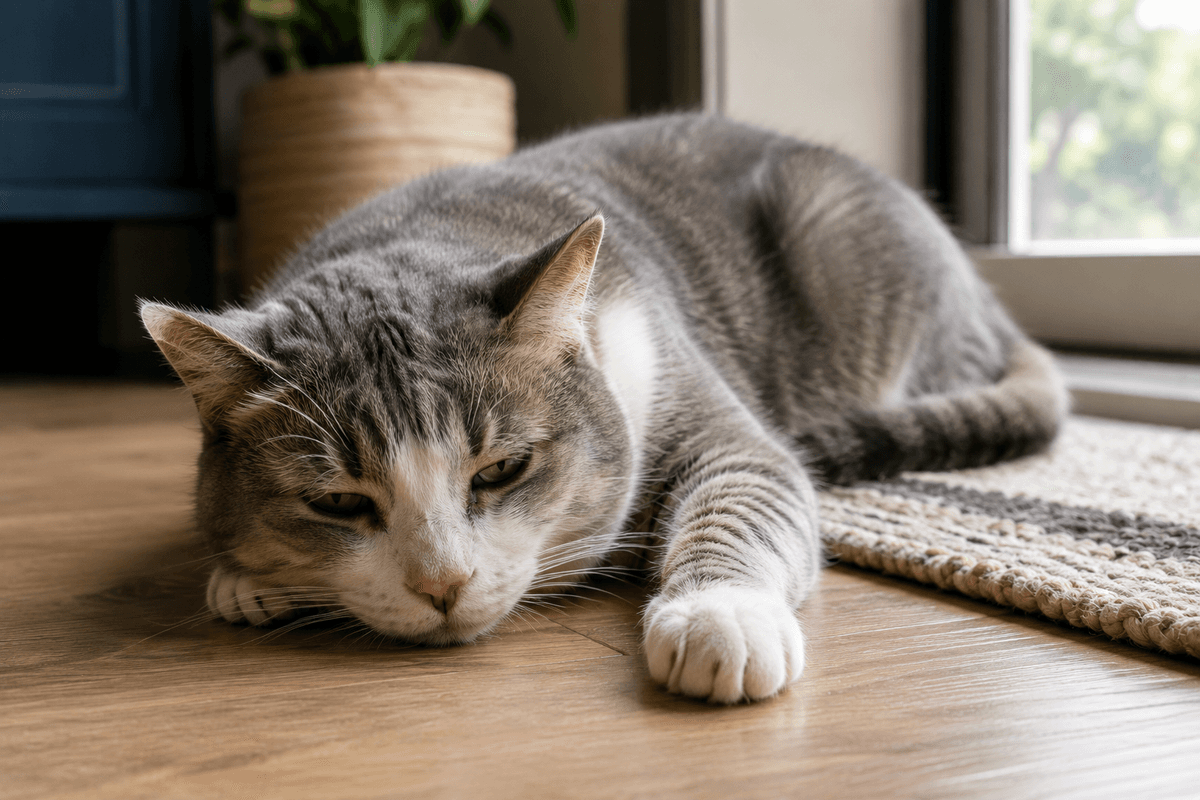
A cat who vomits a handful of times a week occupies an uncomfortable middle ground for a lot of owners: frequent enough to notice, but infrequent enough to explain away. That instinct to wait it out is understandable, but at this frequency, veterinary evaluation is genuinely warranted rather than optional.
Occasional, isolated vomiting happens to healthy cats from time to time. Multiple episodes within the same week is a different story. A comprehensive review of feline vomiting disorders describes chronic vomiting as recurring episodes reflecting an underlying disease process, and a several-times-weekly frequency sits solidly within the range veterinarians consider clinically significant and worth investigating (Batchelor et al., 2013).
It's genuinely common for cats with underlying gastrointestinal disease to look completely fine between vomiting episodes. Research into chronic vomiting causes and diagnostic testing found that structured evaluation frequently uncovered meaningful gastrointestinal disease in cats who, on the surface, appeared to be managing fine (Hauck et al., 2016). A study on diagnosing chronic small bowel disease similarly found that many affected cats had displayed subtle, intermittent signs, vomiting among them, for a long stretch of time before any diagnosis was made (Norsworthy et al., 2013).
A few vomiting episodes per week is a pattern worth taking seriously for several reasons:
- It's frequent enough to represent an active, ongoing process rather than a one-off stomach upset
- It's common for owners to normalize this frequency simply because it doesn't happen every single day
- Underlying causes at this frequency range from manageable food sensitivities to more serious inflammatory or neoplastic disease
- Diagnostic testing tends to have a high yield at this frequency, meaning a workup is more likely than not to identify an actionable cause
None of these points are meant to alarm you, just to reframe "a few times a week" as data worth acting on rather than background noise.
One detail worth paying close attention to is whether the frequency itself is changing. A cat who has crept from occasional vomiting up to several episodes a week is showing a trajectory, and that trajectory often matters more diagnostically than the raw number of episodes in a given week. If you've noticed the pattern intensifying over recent weeks or months, mention this explicitly to your veterinarian, since it can help narrow down what's driving the underlying process.
Chronic gastrointestinal inflammation at this frequency doesn't reliably stay mild or contained. In cats, the anatomy of the pancreas, liver, and intestines means ongoing GI inflammation can spread its effects to nearby organs, contributing to pancreatitis or triaditis, a combined inflammatory condition involving the gut, pancreas, and liver together. What starts as a manageable pattern of vomiting a few times a week can, without intervention, escalate into a more acute and more serious flare-up.
Consensus guidelines from veterinary internal medicine specialists highlight just how closely low-grade, small-cell gastrointestinal lymphoma can mimic ordinary chronic inflammatory bowel disease, both in clinical presentation and on preliminary testing (Marsilio et al., 2023). This overlap is precisely why chronic vomiting at any meaningful frequency, several-times-weekly included, benefits from proper diagnostic evaluation rather than assumptions based on how the cat looks day to day.
If you bring in a cat vomiting several times a week, your veterinarian has a range of tools to help figure out what's going on:
- Bloodwork to screen for organ dysfunction and systemic illness
- Fecal examination to rule out intestinal parasites
- Specialized GI panels, such as cobalamin and folate testing, to assess small intestinal absorption
- Abdominal ultrasound or X-rays to look for structural changes in the GI tract, pancreas, or liver
- Biopsy, when warranted, to distinguish inflammatory disease from low-grade lymphoma
Your veterinarian will typically tailor which of these to pursue first based on your cat's history, exam findings, and how the frequency has trended over time.
For many cats at this frequency, treatment can start with a therapeutic diet trial before moving to more invasive diagnostics. Research on hydrolyzed diets for cats with vomiting or diarrhea in general practice settings found this to be a reasonable and frequently successful starting point (Kathrani et al., 2020). Commercial therapeutic diets designed specifically for chronic gastroenteropathy have also shown measurable clinical improvement in affected cats (Perea et al., 2017). If a cat's vomiting continues or worsens despite a diet trial, that response, or lack of one, is itself useful information that helps guide further workup.
If your cat is vomiting a few times a week, that's a pattern worth having evaluated rather than monitored indefinitely on your own. Vetmodo makes it easy to find local veterinarians who can assess your cat, recommend appropriate testing, and help identify what's really going on. Search Vetmodo today to find a vet near you.