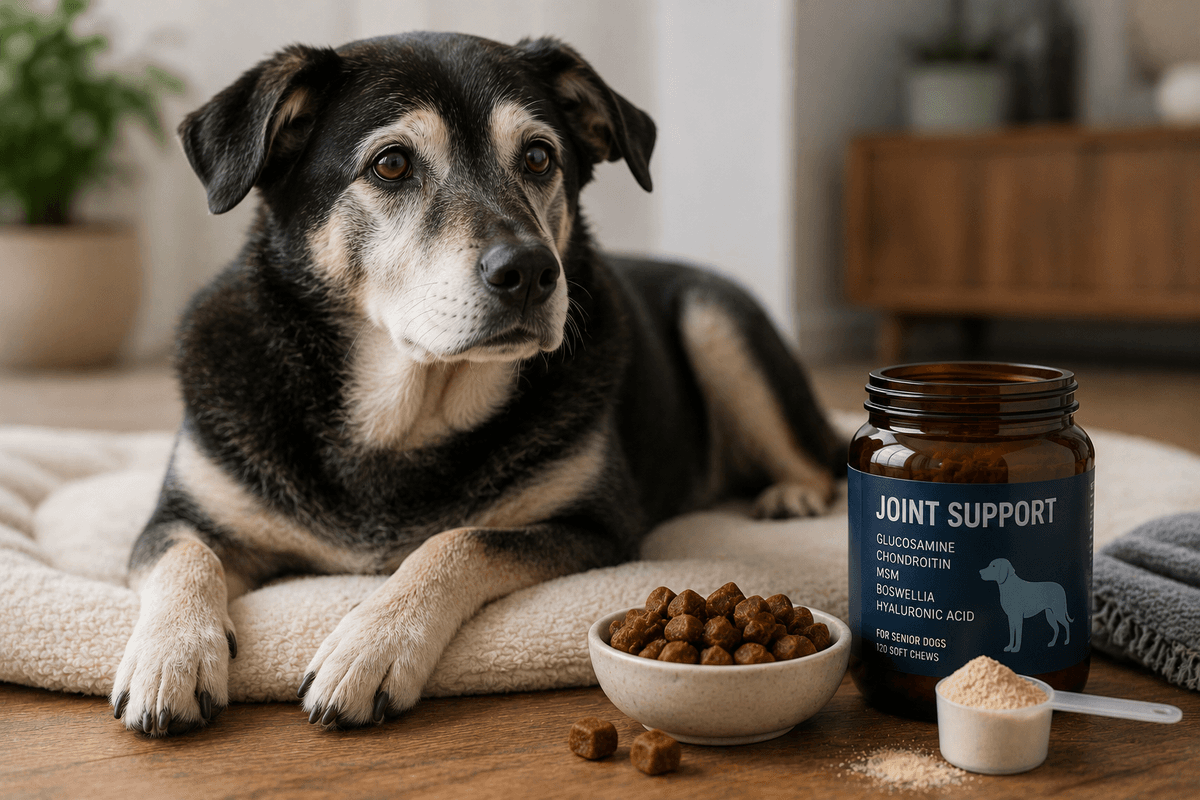
Watching an older dog struggle to stand or hesitate at the bottom of the stairs is a difficult experience for any pet parent. With osteoarthritis (OA) affecting a vast majority of senior canines, it is no surprise that joint supplements, or nutraceuticals, are a multi-million dollar industry. However, much of what is marketed to pet owners is based on outdated beliefs rather than current clinical reality. To truly help your dog, it is essential to distinguish between proven medical interventions and popular "fiction."
Osteoarthritis is far more than just "getting old." It is a complex inflammatory disease of the entire joint. Recent research indicates a staggering prevalence of OA in the shoulder, elbow, hip, and stifle (knee) joints of dogs older than 8 years (Roitner et al., 2024).
Identifying risk factors early, such as breed predisposition, previous injuries, or developmental issues, is key to managing the long-term health trajectory of aging dogs (Anderson et al., 2020).
The COAST (Canine Osteoarthritis Staging Tool) guidelines emphasize that while supplements can be part of a multimodal plan, they should rarely be the only treatment for a dog in clinical pain (Cachon et al., 2023).
For decades, glucosamine and chondroitin have been the "go-to" recommendations. However, modern scientific reviews have repeatedly failed to show consistent clinical benefit for these ingredients. In many large-scale studies, they perform no better than a placebo in reducing pain once OA has already set in (Pye et al., 2022).
- Omega-3 fatty acids (EPA/DHA): High levels of omega-3s, specifically from marine sources such as fish oil and to a lesser extent krill oil, remain the most scientifically backed nutritional intervention for reducing joint inflammation (Barbeau-Grégoire et al., 2022). These have consistently demonstrated a mild benefit and the ability to potentially reduce the need for certain prescription medications.
- Green-Lipped Mussel (GLM): This specific mussel from New Zealand contains a unique blend of fatty acids and amino acids. Systematic reviews have found that GLM shows more consistent promise in improving mobility scores than standard glucosamine (Barbeau-Grégoire et al., 2022).
- Undenatured (Type II) collagen: Unlike hydrolyzed collagen, which is just protein, non-hydrolyzed Type II collagen works through "oral tolerance." It essentially trains the immune system to stop attacking the joint's own cartilage, showing potential for managing OA symptoms (Pye et al., 2022). Clinical efficacy has not yet been consistently demonstrated in large trials.
While certain supplements can help manage the symptoms of OA, they appear best used as part of a multimodal approach formulated by your primary care veterinarian.
Beyond what you put in your dog's food bowl, how they move is critical. The "weekend warrior" lifestyle, staying sedentary all week and hiking for miles on Saturday, can be uncomfortable for arthritic joints.
- Controlled, low-impact exercise: Walks on soft surfaces, like grass, may be better than one long trek. Activities like swimming or underwater treadmills provide resistance without the "concussion" of pavement, which can be beneficial for more severely affected animals. A minimum of 10 minutes of activity per day is often recommended to start and can be increased as tolerated and guided by a veterinarian.
- Professional rehabilitation: Veterinary rehabilitation (physical therapy) is a game-changer for senior dogs. Therapies like therapeutic laser, targeted stretches, and core-strengthening exercises help maintain muscle mass, which supports the failing joint (Cachon et al., 2023).
If you want to help your aging dog's joints, the most scientifically proven intervention isn't a pill: it's maintaining a lean body condition.
- Longevity and health: Research shows that dogs on a restricted-calorie diet live significantly longer and develop painful OA much later in life (Kealy et al., 2002; Lawler et al., 2008).
- The inflammation factor: Fat tissue produces pro-inflammatory chemicals that actively worsen joint pain (Marshall et al., 2009).
- Biological age: Keeping your dog lean preserves a younger biological age, which is a powerful predictor of health trajectory and mortality (Herzig et al., 2025).
Finding the right professional to manage your dog's golden years is essential for their quality of life. Vetmodo makes it easy to locate general practice veterinarians who specialize in senior wellness, weight management, and multimodal pain protocols, as well as rehab trained veterinarians who can offer rehabilitation and physical therapy.
Our platform allows you to filter for local experts who offer advanced care options, such as nutritional counseling for specialized joint diets or referrals for physical rehabilitation and therapeutic laser. By connecting with a vet who utilizes the COAST guidelines, you can build a personalized plan that combines evidence-based supplements with clinical medicine to keep your senior dog moving comfortably for years to come.
We hope these tips help you and your pet live longer and happier together. Search Vetmodo today to find veterinarians in your area who can help you navigate your dog's joint health.