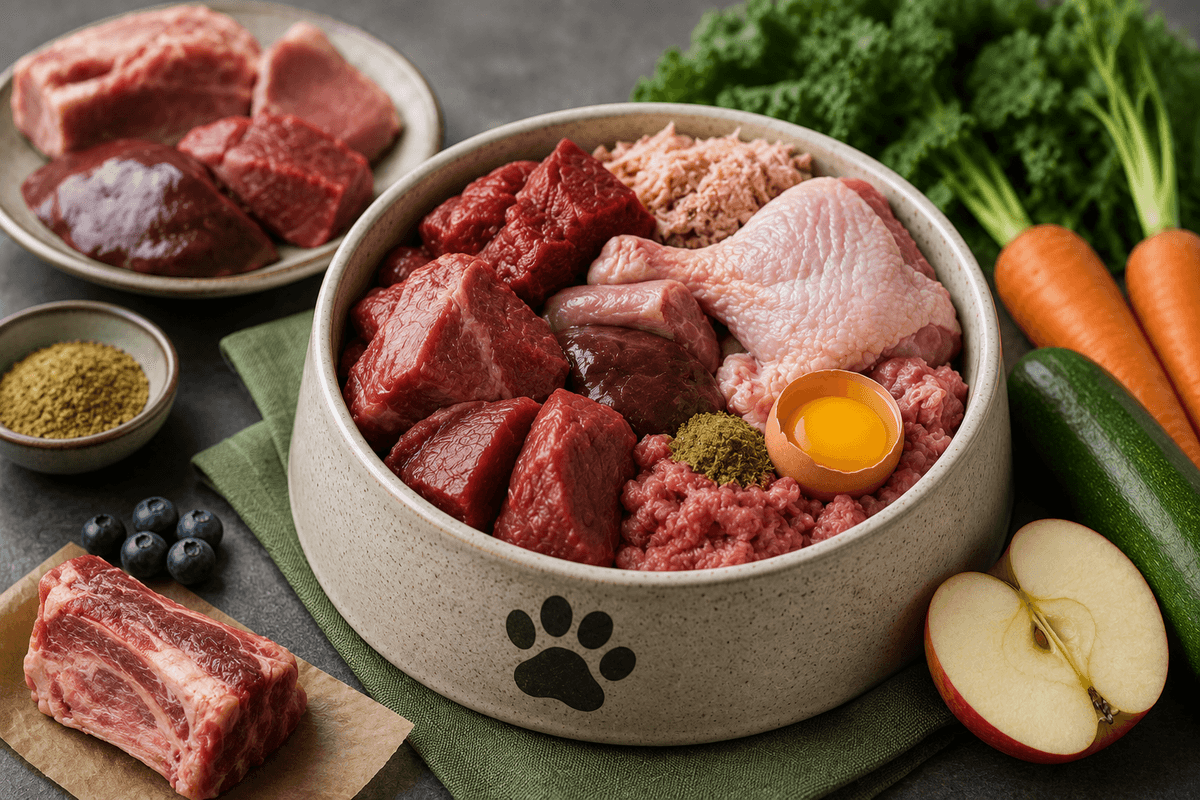
Raw feeding has grown into one of the most passionate corners of pet nutrition, built around the idea that feeding dogs a diet closer to what their wild ancestors ate is inherently healthier. Proponents point to shinier coats, smaller stools, and a feeling of feeding something more "natural." But a closer look at the research tells a more complicated story, one that includes real, documented risks to both pets and the humans who live with them. Before deciding whether raw feeding is right for your dog, it's worth understanding what the evidence actually shows.
Owners who switch to raw diets are often motivated by a desire to feed something they see as more natural, along with reports of improved stool quality, shinier coats, and higher energy levels. Some smaller studies do support a few of these observations, finding that raw diets can be highly digestible and may support a more diverse gut microbiome compared to some commercial diets (Sandri et al., 2017). However, the idea that raw feeding returns a dog's diet to something closer to its wild ancestors doesn't hold up well under scrutiny. Research comparing the gut bacteria of dogs on raw diets to wolves found that switching to raw food only partially shifts a dog's microbiome toward a wolf-like profile, undercutting the "ancestral diet" argument used to market these foods (Xu et al., 2021).
Raw meat is, by nature, more likely to carry harmful bacteria than cooked food, since cooking is one of the most effective ways to kill pathogens. Multiple studies testing commercial raw pet foods have found Salmonella, Listeria, and toxigenic E. coli in a meaningful percentage of samples (Weese et al., 2005; Nemser et al., 2014). These aren't rare, isolated findings. They reflect a consistent pattern across independent research, and this risk isn't limited to your dog. It's a household issue.
Perhaps the most underappreciated risk of raw feeding is the zoonotic danger, meaning the risk of disease passing from pet to person. Dogs fed raw meat-based diets can become carriers of drug-resistant Salmonella, shedding the bacteria in their stool and saliva even if they show no symptoms themselves (Bernaquez et al., 2025). This poses a real threat to anyone in the household with a developing or weakened immune system, including infants, older adults, and people undergoing certain medical treatments.
Raw feeding has also been identified as a significant risk factor for dogs carrying antimicrobial-resistant bacteria more broadly, a concern that extends beyond any single pathogen and touches on the larger public health problem of antibiotic resistance (Karalliu et al., 2024).
To address these contamination concerns, many commercial raw manufacturers now use high-pressure processing, or HPP. This is a cold pasteurization method that applies intense pressure to sealed, packaged food to reduce bacteria without cooking it, which is why it appeals to raw brands trying to keep the food "raw" while lowering pathogen risk. Laboratory research supports its usefulness: one study found that HPP reduced Salmonella in raw pet food to below detectable levels under several conditions, without noticeably compromising the product's fresh appearance (Serra-Castelló et al., 2023).
HPP is a genuine step forward, but it comes with two important caveats. First, this evidence comes from controlled laboratory conditions, and reducing bacteria is not the same as eliminating it, so safe handling and storage still matter even with HPP-treated products. Second, HPP does nothing to address the separate problem of nutritional balance discussed below. A raw food can be HPP-treated and still be nutritionally incomplete, so "HPP-treated" is not the same as "safe and complete."
Beyond bacteria, raw diets, especially homemade ones, are frequently found to be nutritionally unbalanced. A review of raw feeding found that these diets carry potential health benefits alongside real threats, particularly around getting the ratio of nutrients right (Główny et al., 2024).
Common nutritional problems found in raw diets include:
- Calcium-to-phosphorus imbalances: Growing puppies are especially vulnerable to an incorrect calcium-to-phosphorus ratio, which can lead to permanent skeletal problems if not corrected (Główny et al., 2024).
- Excess fat, insufficient protein: Assessments of commercial raw pet foods have found some products with dangerously high fat content that doesn't leave room for adequate protein levels (Vecchiato et al., 2022).
- Inconsistent formulation: Because many raw diets, especially homemade recipes, aren't formulated by a veterinary nutritionist, they often lack the balance and completeness that commercial, AAFCO-compliant diets are required to provide.
The evidence for meaningful, proven benefits of raw feeding is thinner than marketing suggests. While some studies do show improved digestibility and a more diverse gut microbiome in the short term (Sandri et al., 2017), a broader review of the current evidence describes raw meat diets as more of a "natural symbol" than a nutritionally superior choice, noting that much of the perceived benefit isn't backed by strong, controlled research (Lyu et al., 2025). For most healthy dogs, a well-formulated, AAFCO-compliant commercial diet offers comparable or better nutritional outcomes without the associated risks.
For owners who still want to explore raw feeding, the safest approach starts with a conversation with your veterinarian rather than a switch based on online recommendations. Any raw diet should still meet AAFCO standards for completeness and balance for your dog's specific life stage (Cline et al., 2021), and strict food safety practices, such as thorough handling, sanitizing food bowls and prep surfaces, and avoiding raw feeding around infants, elderly family members, or anyone immunocompromised, are essential to reduce risk.
Choosing the right diet for your dog shouldn't be a guessing game, especially when the stakes include your dog's health or your family's safety. Vetmodo makes it easy to find a trusted veterinarian near you who can walk you through the risks and benefits of raw feeding for your specific dog, recommend safer alternatives if needed, and make sure whatever you choose is nutritionally complete for their life stage. Search Vetmodo today to connect with a vet who can help you feed your dog with confidence.