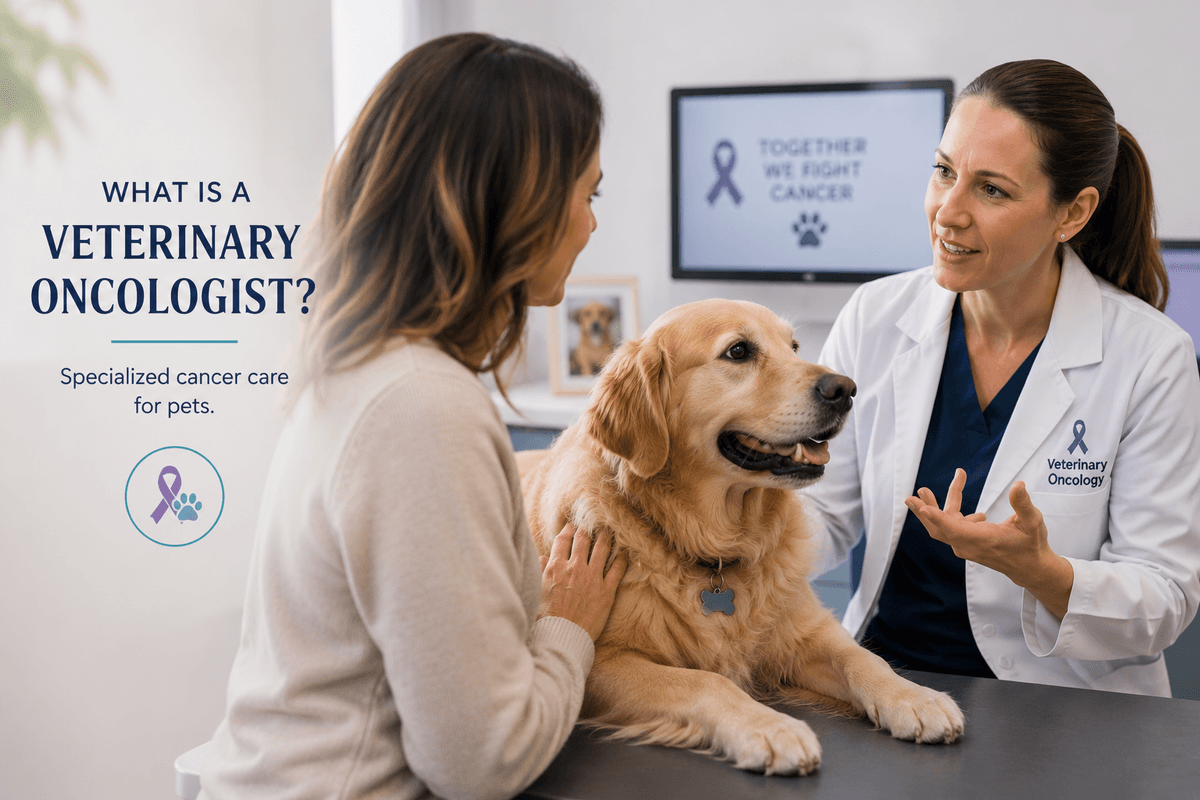
Hearing the word cancer from your veterinarian is one of the hardest moments in pet ownership. It’s natural to feel overwhelmed and unsure of what comes next. One of the first things many general veterinarians do after a cancer diagnosis, or even a suspicious finding, is refer the case to a veterinary oncologist. Understanding what this specialist does can make the path ahead feel less uncertain.
A veterinary oncologist is a veterinarian who has pursued additional education specifically focused on cancer care in animals. After veterinary school, this typically includes a one-year rotating internship, followed by a two- to three-year residency dedicated to oncology. During that residency, the veterinarian works under board-certified specialists, manages a wide range of cancer cases, and studies the biology and behavior of different tumor types.
To become board-certified, the veterinarian must also pass rigorous examinations administered by a recognized specialty college, such as the American College of Veterinary Internal Medicine (Oncology). This process mirrors the path a human oncologist takes to become board-certified, and it’s part of why the guidance from a specialist can look so different from a general wellness visit (Christensen et al., 2026).
Because cancer can behave so differently from one pet to the next, veterinary oncologists build a skill set that goes well beyond a general practice visit. Their day-to-day work often includes:
- Staging and working up various cancers, meaning they determine how advanced a cancer is and whether it has spread, using bloodwork, imaging, and biopsy results.
- Recommending and managing chemotherapy protocols tailored to the specific cancer type and the individual pet.
- Initiating chemotherapy treatment, then monitoring how the pet responds and adjusting doses or medications as needed.
- Offering non-chemotherapy treatment options, including targeted therapies and supportive care, when appropriate for the case.
- Recommending surgery or radiation therapy, either performing these treatments themselves or coordinating closely with a surgical or radiation oncology specialist.
- Discussing treatment options and prognosis in depth, so owners understand what each path may look like for their pet.
This breadth of expertise matters because cancer treatment is rarely one-size-fits-all. A lymphoma diagnosis in a dog, for example, calls for a very different approach than a mast cell tumor in a cat, and an oncologist has the training to tell the difference and respond accordingly (Mullin et al., 2024).
Chemotherapy in pets is approached differently than it is in people. The goal is typically to extend a good quality of life rather than pursue treatment at any cost to comfort. Veterinary oncologists are trained to select drug combinations and dosing schedules that minimize side effects while still targeting the cancer effectively.
Once treatment begins, the oncologist closely monitors bloodwork, weight, and how the pet is tolerating each round of treatment. If side effects appear or the cancer responds in an unexpected way, they adjust the protocol. This kind of hands-on, ongoing management is one of the clearest reasons general practice veterinarians refer complex cancer cases to a specialist.
Not at all. While chemotherapy is often what comes to mind first, oncologists also weigh in on, and sometimes perform, surgical removal of tumors and coordinate radiation therapy for cancers that respond well to it. Many cases involve a combination of approaches, and part of the oncologist’s role is helping the primary care veterinarian and the pet owner decide which combination makes the most sense given the type of cancer, its location, and the pet’s overall health.
Newer treatment options, including immunotherapy and targeted molecular therapies, are also becoming more available in veterinary oncology, giving pet owners more choices than were available even a decade ago (Mullin et al., 2024).
One of the most valuable parts of working with a veterinary oncologist is the conversation around prognosis. These specialists have seen enough cases of a given cancer type to speak in detail about what to realistically expect, including average survival times, likely response to treatment, and what quality of life might look like along the way.
This information helps owners make decisions that fit their pet and their family, whether that means pursuing aggressive treatment, choosing a more conservative approach, or focusing on comfort-focused care. Oncologists are also often involved in these end-of-life conversations, helping families weigh their options with clear, current information (Kiselow, 2019).
Many are. Veterinary oncologists frequently participate in clinical trials and research studies, both to advance treatment options for pets and, increasingly, to inform human cancer research. Because dogs develop naturally occurring cancers that share biological similarities with human cancers, studying cancer in pet dogs has become a valuable tool in comparative oncology research (LeBlanc & Mazcko, 2020).
This research also supports better cancer registries and tracking, which helps the veterinary field understand how common certain cancers are and how treatments perform over time across large numbers of patients (Fonti & Millanta, 2025). The field continues to evolve quickly, with ongoing research shaping new standards of care for pets with cancer (Queiroga et al., 2026).
If your veterinarian refers you to an oncologist, it can help to prepare a few things ahead of time:
- Bring copies of recent bloodwork, imaging, and any biopsy or pathology reports.
- Write down your questions in advance, since appointments often cover a lot of information.
- Think about your goals for treatment, whether that’s pursuing every available option or focusing on comfort.
- Ask about the expected timeline, cost, and what monitoring will look like during treatment.
A cancer diagnosis is never easy to hear, but a veterinary oncologist brings focused expertise to help you and your pet through it. From accurate staging to carefully managed treatment and honest conversations about what lies ahead, this specialty exists to give pets the best possible chance while supporting owners through a difficult time.
If your pet has been referred to an oncologist, Vetmodo can help you find a board-certified veterinary cancer specialist near you, compare services, and connect with a clinic that fits your pet’s needs. Search Vetmodo today to find trusted cancer care close to home.