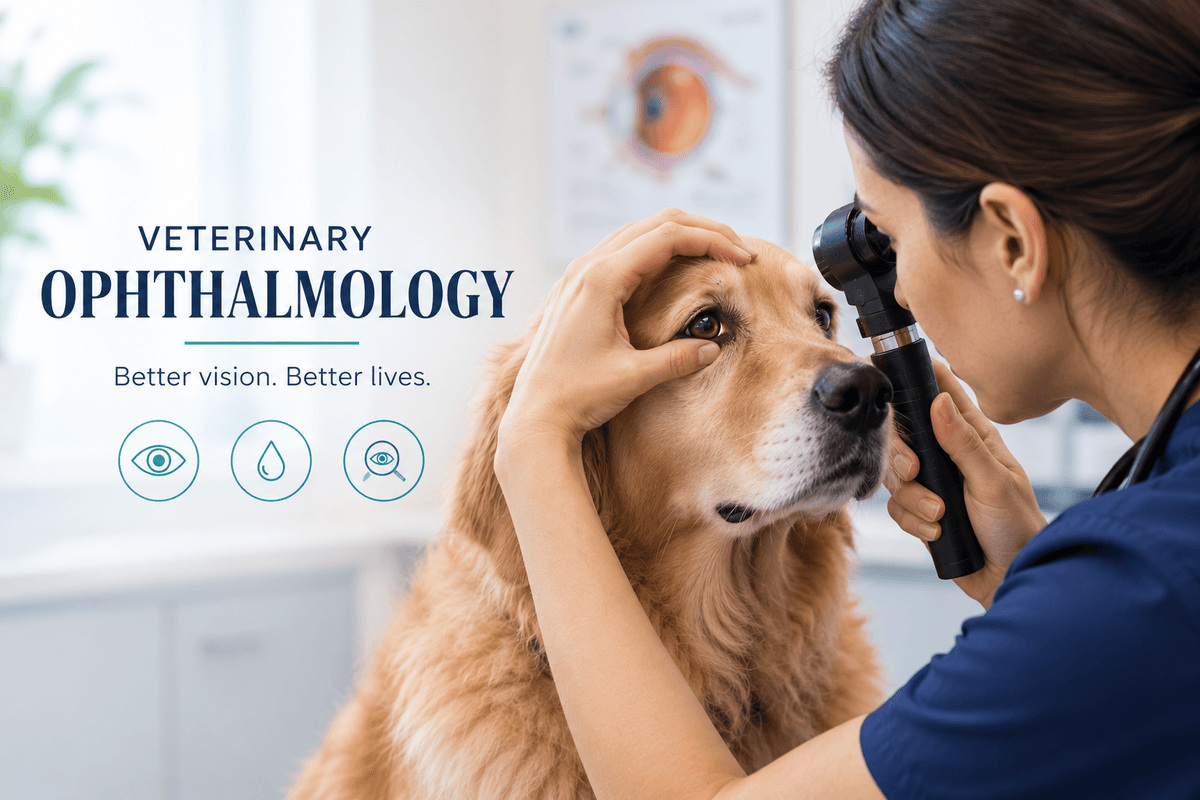
Eyes are delicate, and problems there can escalate fast. What looks like minor redness or squinting one day can become a serious threat to your pet’s vision within 24 to 48 hours. This is where a veterinary ophthalmologist comes in, a specialist trained to diagnose and treat eye disease with a level of precision and speed that can genuinely save a pet’s sight.
Veterinary ophthalmologists complete a veterinary degree, then pursue additional years of focused training in ophthalmology, typically including an internship and a multi-year residency spent entirely on eye disease and surgery. During this time, they study the anatomy, diseases, and surgical techniques specific to the eye in far greater depth than is possible in general practice.
To become board-certified, they must pass examinations administered by a recognized veterinary ophthalmology specialty college. This intensive, narrowly focused training is what allows them to catch subtle signs of disease and act quickly, something that matters enormously with the eye, where timing can determine whether a pet keeps or loses vision (Martabano, 2026).
Veterinary ophthalmologists see a wide range of cases, from routine to urgent. Common conditions include:
- Corneal ulcers and other injuries to the surface of the eye, which can worsen rapidly without proper treatment.
- Cataracts, which cloud the lens and can significantly impair vision if left untreated.
- Glaucoma, a painful increase in eye pressure that can lead to permanent blindness if not managed quickly.
- Lens luxation, where the lens shifts out of its normal position and often requires surgery.
- Chronic or non-healing corneal defects that don’t respond to standard treatment.
- Eye conditions present at birth or that develop in young, growing pets.
Because these conditions can look similar in their early stages but require very different treatments, an accurate and timely diagnosis matters a great deal (Glaze, 1997).
Unlike many other areas of the body, the eye has very little room for error. A corneal ulcer that seems minor can progress to a ruptured eye within a day or two if it’s the wrong type or isn’t treated appropriately. Glaucoma can cause irreversible vision loss within hours of a pressure spike. This is why eye emergencies are treated with urgency in veterinary medicine, and why general veterinarians often refer pets to an ophthalmologist quickly rather than waiting to see if a problem resolves on its own (Mandell & Holt, 2005).
This urgency is especially true for young or newly adopted pets, where congenital or early-onset eye conditions can be easy to miss without a trained eye behind the exam (Hamilton, 1999). In many of these situations, the gap between an accurate same-day diagnosis and a delayed one can be the difference between a full recovery and permanent vision loss (Wynne, 2020).
Surgery is a major part of this specialty, and many of the procedures veterinary ophthalmologists perform are aimed at restoring or protecting vision. Examples include:
- Cataract surgery using phacoemulsification, a technique that removes the clouded lens and often restores functional vision (Edelmann et al., 2022).
- Surgical treatment for glaucoma, including procedures designed to reduce eye pressure and preserve comfort and vision for as long as possible (Maggio & Bras, 2015).
- Treatment for lens luxation, which may include surgical removal of the displaced lens or other procedures to manage related pressure changes (King et al., 2025).
- Corneal grafting and reconstructive procedures for severe ulcers or corneal damage that won’t heal on their own (Lampropoulos & Tzouganakis, 2026).
- Debridement procedures for chronic corneal defects that aren’t responding to medical treatment alone (McKeever et al., 2026).
These procedures require specialized equipment and microsurgical skill that go well beyond what’s available in a general practice setting, which is part of why referral to a specialist often makes such a meaningful difference in outcome.
If your veterinarian refers you to an ophthalmologist, a few steps can help the visit go smoothly:
- Note when symptoms started and whether they’re getting better, worse, or staying the same.
- Bring any medications or eye drops you’ve already tried, including how often they were used.
- Avoid applying new eye medications right before the appointment unless directed, since some drops can interfere with diagnostic testing.
- Ask about the urgency of the situation and how quickly you should expect treatment to begin.
Eye problems can move fast, but so can the right care. A veterinary ophthalmologist brings the specialized training and surgical skill needed to catch subtle changes early and act before permanent damage occurs, giving your pet the best possible chance at keeping their vision.
If your pet is showing signs of an eye problem, don’t wait to find the right care. Vetmodo helps you quickly locate a board-certified veterinary ophthalmologist near you and compare clinic services, so you can get your pet seen fast. Search Vetmodo today to find trusted eye care close to home.