Veterinary Internal Medicine Specialists (DACVIM): What Pet Owners Need to Know
VE
Vetmodo Editorial TeamApril 20, 2026
Key Takeaways
•Specialized Expertise: Internists (DACVIM) undergo 3–5 years of additional training to manage complex, multi-organ diseases that go beyond general practice
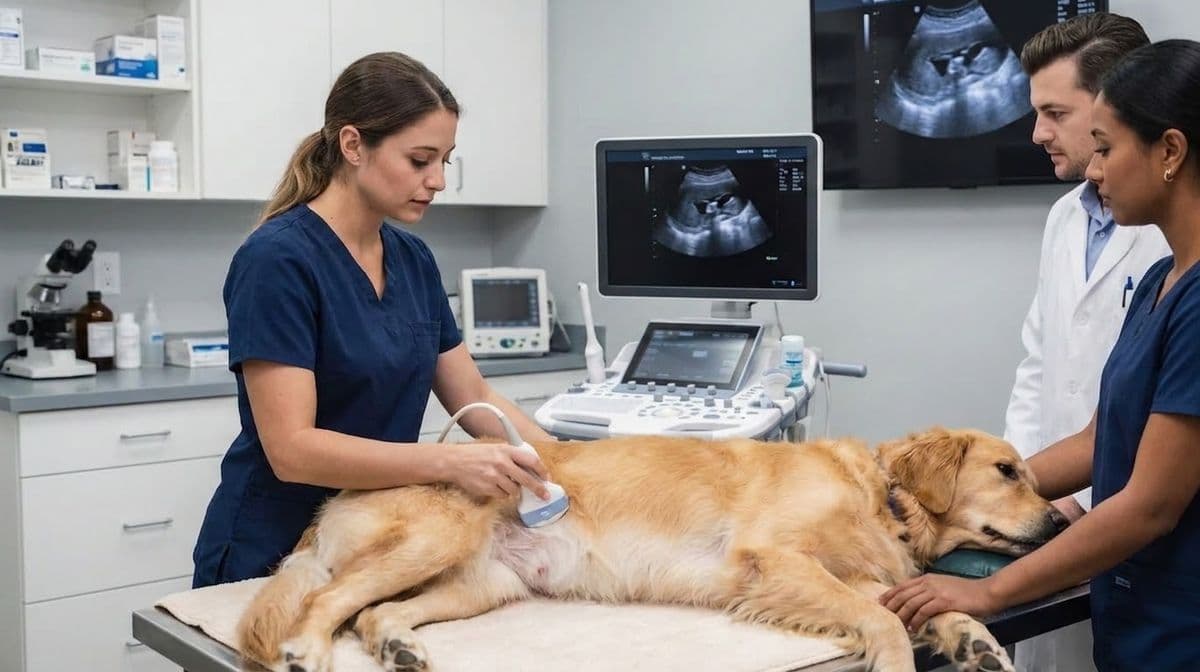
•Advanced Tools: They utilize non-invasive diagnostics like endoscopy and ultrasound to find answer, sometimes avoiding the need for major exploratory surgery.
•Collaborative Care: A specialist doesn't replace your primary vet; they work as a team to manage chronic issues like diabetes, kidney disease, and IBD.
•Telehealth Access: If an in-person referral isn't possible, your primary vet can often consult with an internist via telemedicine to optimize your pet's treatment plan.
Veterinary Internal Medicine: What Pet Owners Need to Know
When your dog or cat faces a health issue that doesn’t fit neatly into a simple diagnosis, veterinary internal medicine can provide answers. This specialty focuses on complex diseases affecting internal organs in dogs and cats - conditions that may be chronic, puzzling, or resistant to standard treatments.
A veterinary internist is a board-certified specialist, often holding the DACVIM (Small Animal Internal Medicine) credential, who handles serious or long-standing problems requiring advanced diagnostic tools and clinical reasoning (ACVIM Resources for Animal Owners). This article will help you understand what an internist does, how they differ from your primary care veterinarian, what diseases they treat, and how telehealth consultation can help when in-person referral isn’t possible.
How an Internal Medicine Specialist Differs From a General Practice Vet
Think of your family veterinarian as a “family doctor” for pets - they handle vaccines, wellness care, routine illnesses, and many straightforward chronic conditions. Internal medicine specialists, by contrast, function like human internists, focusing on depth over breadth.
Key differences include:
Internists complete 3–5 additional years of advanced training (internship + residency) after veterinary school
They pass comprehensive examinations covering the ACVIM board certification process
GPs manage uncomplicated conditions like routine ear infections; internists tackle recurrent unexplained fevers or non-responsive diabetes mellitus
Internists spend significant time interpreting complex lab data across multiple organ systems
They coordinate care for pets with several concurrent diseases
What Veterinary Internists Are Trained to Do
Board-certified internists complete ACVIM-approved residency training that culminates in rigorous examination. This training typically includes a one-year rotating internship and a three-year small animal medicine residency focused exclusively on dogs and cats.
During training, internists improve procedural skills and develop competencies in:
Advanced physical examination techniques
Complex clinical reasoning integrating information from multiple organ systems
Sophisticated diagnostics including endoscopy, abdominal ultrasound, and bone marrow evaluation
Interpreting up-to-date research to apply evidence-based medicine
Frequently asked questions
When should I ask my vet for a referral to an internist?
According to the 2025 AAHA Referral Guidelines, you should consider a specialist if your pet’s symptoms, such as chronic vomiting, coughing, or weight loss, are not responding to standard treatment, or if your pet is managing multiple "competing" diseases simultaneously. An internist is also necessary if your pet requires advanced, non-invasive procedures like endoscopy or specialized biopsies (Burney et al., 2025).
How do I know if my pet needs an internal medicine specialist rather than my regular vet?
Your primary care veterinarian will typically recommend referral when a diagnosis remains unclear after initial testing, when illness is not responding to standard treatment, when the condition is rapidly worsening, or when multiple health problems are occurring simultaneously. Common examples include a diabetic dog whose blood sugar remains unstable despite insulin adjustments, a cat losing weight despite normal initial bloodwork, or a pet with a persistent fever and no clear cause. If you are concerned about your pet's progress, it is always appropriate to ask your veterinarian whether a specialist referral would be beneficial.
What is a DACVIM and what does board certification mean?
DACVIM stands for Diplomate of the American College of Veterinary Internal Medicine. It is a board certification awarded to veterinarians who complete three to five years of advanced postgraduate training, including a rotating internship and a focused residency, and who pass a rigorous examination administered by the ACVIM. Board certification confirms that a specialist has met a high, independently verified standard of expertise in internal medicine. Not all veterinarians who see complex cases hold this credential, so it is worth confirming board certification status when seeking specialist care.
What should I bring to my pet's first appointment with an internist?
Bring all available medical records, prior laboratory results, imaging reports, and any medications your pet is currently taking. A written timeline of your pet's symptoms: when they started, how they have changed, and what treatments have already been tried, is particularly helpful and saves time during the appointment. If your pet is scheduled for same-day procedures, your veterinarian will advise whether fasting beforehand is required. First appointments typically last 30 to 60 minutes, and the internist will use this time to take a thorough history, perform a physical examination, and discuss a diagnostic and treatment plan with you.
Citations
ACVIM Resources for Animal Owners. ACVIM Resources for Animal Owners.
Block G. Evidence-based veterinary medicine-potential, practice, and pitfalls. 2024. Journal of Veterinary Internal Medicine.
Burney D, et al. 2025 AAHA Referral Guidelines. 2025. Journal of the American Animal Hospital Association.
Burrows CF. Meeting the expectations of referring veterinarians. 2008. Journal of Veterinary Medical Education.
Sullivant AM, et al. Strategies to Improve Case Outcome When Referral Is Not Affordable. 2020. Journal of Veterinary Medical Education.
VE
Written by
Vetmodo Editorial Team
The information on this website is for educational purposes only and does not constitute veterinary medical advice, diagnosis, or treatment. Always consult a licensed veterinarian regarding your pet's health. Reliance on any information provided by Vetmodo is solely at your own risk.
Many internists also teach at a veterinary college or teaching hospital, conduct research, or lead clinical trials, contributing to better treatment options for pets with challenging conditions.
What Does Veterinary Internal Medicine Encompass?
Small animal internal medicine covers diseases of internal organs and systems, particularly when more than one system is involved. The field includes several subdisciplines:
Gastroenterology
Focus Area: Gastrointestinal tract, stomach, and intestines.
Hepatology
Focus Area: Liver disease and the gall bladder.
Endocrinology
Focus Area: The endocrine system, including the thyroid, adrenal, and pituitary glands.
Nephrology & Urology
Focus Area: Kidney disease and the urinary tract.
Respiratory Medicine
Focus Area: Respiratory disease, the lungs, and airways.
Infectious Diseases
Focus Area: Lyme disease, tick-borne conditions, and fungal infections.
Hematology
Focus Area: Blood cells, red blood cells, and general blood diseases.
Immunology
Focus Area: Immune disorders and autoimmune conditions.
Internists often see pets whose clinical signs, such as unexplained weight loss, chronic vomiting, excessive thirst, coughing, or fevers, don’t point to a single cause. They frequently coordinate with other specialty departments like cardiology, oncology, or neurology to provide holistic care to pets.
Common Diseases and Problems Seen by Internal Medicine Specialists
Each internist’s caseload varies, but common categories of disease requiring specialist care include:
Other diseases requiring immunosuppressive medications
Infectious and Systemic:
Tick-borne diseases, fungal infections
Fevers of unknown origin, multi-organ infections
Genetic issues and birth defects affecting internal organs
Internists often co-manage cancers that impact internal organs, working with oncology teams as part of a coordinated internal medicine team.
Advanced Diagnostics and Procedures Used in Internal Medicine
One core role of internal veterinary medicine practitioners is choosing and interpreting advanced testing to reach an accurate diagnosis efficiently. Common approaches include:
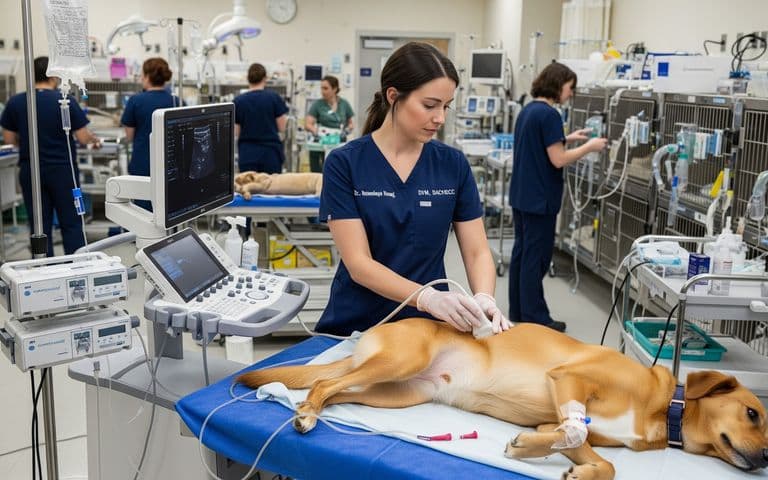
Diagnostic imaging: Abdominal ultrasound, CT scans, and occasionally MRI for detailed organ visualization
Endoscopy: Flexible cameras passed into stomach, intestines, or airways for direct biopsy without major surgery
Sampling procedures: Fine-needle aspirates, bone marrow evaluation, minimally invasive biopsies under sedation
Internists coordinate anesthesia plans with other specialists for pets with heart, lung, or kidney disease to keep procedures safe.
When Your GP Vet Might Refer You to an Internal Medicine Specialist
Referral is a positive step: it means your family veterinarian wants your pet to have the best chance at a clear initial diagnosis and effective treatment plan. Following 2025 AAHA Referral Guidelines by Burney and colleagues (Burney et al., 2025), referral is often recommended when:
Diagnosis remains unclear after initial tests
Illness doesn’t respond to standard treatment or keeps recurring
Disease is rapidly worsening
Multiple health issues occur simultaneously
Concrete examples include a diabetic dog still unstable despite insulin adjustments, a cat losing weight despite normal initial tests, or a young pet with persistent fever and joint pain. Some owners request referral themselves. This is appropriate and often welcomed.
What to Expect From a Visit With an Internal Medicine Specialist
A first visit typically lasts 45–90 minutes. The internist will:
Review your pet’s medical records, prior lab tests, and imaging sent by your GP
Take detailed history covering timelines, medications, diet, environment, and pet’s behavior
Perform a thorough physical exam
Discuss possible diagnoses and recommended diagnostic and therapeutic plans
Address cost, risks, and benefits of each option
Same-day procedures may be possible (bring your pet fasting if instructed). Good internists tailor therapeutic plans to your family’s budget, following strategies highlighted by research on affordable care options (Sullivant et al., 2020).
Working Together: GP Veterinarian, Internist, and Pet Owner
The most successful cases occur when the GP, internist, and family function as a team. Information flows in both directions:
Your GP sends records and a referral letter
The internist provides a thorough summary after each visit
You receive a written treatment plan and home-care instructions
Internists prioritize meeting referring veterinarians’ expectations through accessibility, respect for prior workups, and clear communication (Burrows, 2008). Some treatments happen at your GP clinic; others remain under the internal medicine service. Diagnostic and treatment plans are individualized.
When Referral Isn’t Possible: Telehealth and Other Options
Distance, mobility, cost, or limited local availability can make in-person visits to an internal medicine department difficult. Many internists now offer teleconsultation to support GP vets remotely.
How it typically works:
Your GP sends records, imaging, and lab results to the internist
The internist provides written or virtual consultation with recommendations
Your GP implements the diagnostic and therapeutic plans locally
In most regions, internists cannot diagnose or prescribe directly to owners via telehealth without examining the pet, they consult with your GP who maintains the veterinarian-client-patient relationship. Vetmodo's evidence-focused approach supports these teleconsults by helping clinicians rapidly access current best practices. Ask your GP if teleconsulting with a board-certified internist is available for your case.
How Evidence-Based Internal Medicine Benefits Your Pet
Evidence-based veterinary medicine combines the best available research, clinician expertise, and your values and preferences. As research illustrates, internists actively study how to apply research to real patients while avoiding common pitfalls (Block, 2024).
Practical examples include choosing antibiotics based on culture results rather than habit, or using modern insulin protocols for diabetic cats. Vetmodo helps clinicians and owners navigate research for clearer medical care decisions, while still considering quality of life, budget, and your pet’s temperament.
Finding a Veterinary Internal Medicine Specialist
Many internists work in specialty hospitals, referral centers, and university teaching hospitals. Vetmodo.com helps pet owners to find Internal Medicine specialists near them who can provide their pet the level of specialized care they need.
If no internist is nearby, ask about remote consultation options between your GP and a distant specialist. Need help finding a general practitioner who can work with an Internist? Vetmodo.com can help with that, too.
Conclusion: Deciding Whether Your Pet Needs an Internist
A veterinary internal medicine specialist provides depth of expertise for pets with persistent, complex, or unclear illnesses. If your pet has digestive problems, hormonal disease, or other diseases that aren’t improving, talk openly with your GP vet about referral or teleconsultation. Asking is always appropriate.
Vetmodo's mission is supporting thoughtful, evidence-based specialist care so pets with challenging problems have the best possible outcome and quality of life. Keep notes on your pet’s symptoms, medications, and questions so you’re prepared for either a local visit or telehealth-supported consultation with the veterinary profession’s internal medicine experts.
Can a veterinary internist consult on my pet's case without an in-person visit?
In many cases, yes. Telehealth consultation between your primary care veterinarian and a board-certified internist is increasingly available, particularly when distance, cost, or limited local access makes an in-person referral difficult. In this model, your veterinarian sends records, imaging, and laboratory results to the internist, who provides written recommendations that your veterinarian then implements locally. In most regions, internists cannot diagnose or prescribe directly to pet owners via telehealth without a physical examination; the consultation is conducted veterinarian to veterinarian. Ask your primary care vet whether teleconsultation with a specialist is an option for your pet's situation.
Specialty Care
What Is a Veterinary Nutritionist and When Do I Need One?
Your pet's diet touches every system in their body, and when something goes wrong, food can be part of the solution. A board-certified veterinary nutrition specialist brings the clinical training to turn that principle into a precise, personalized plan.