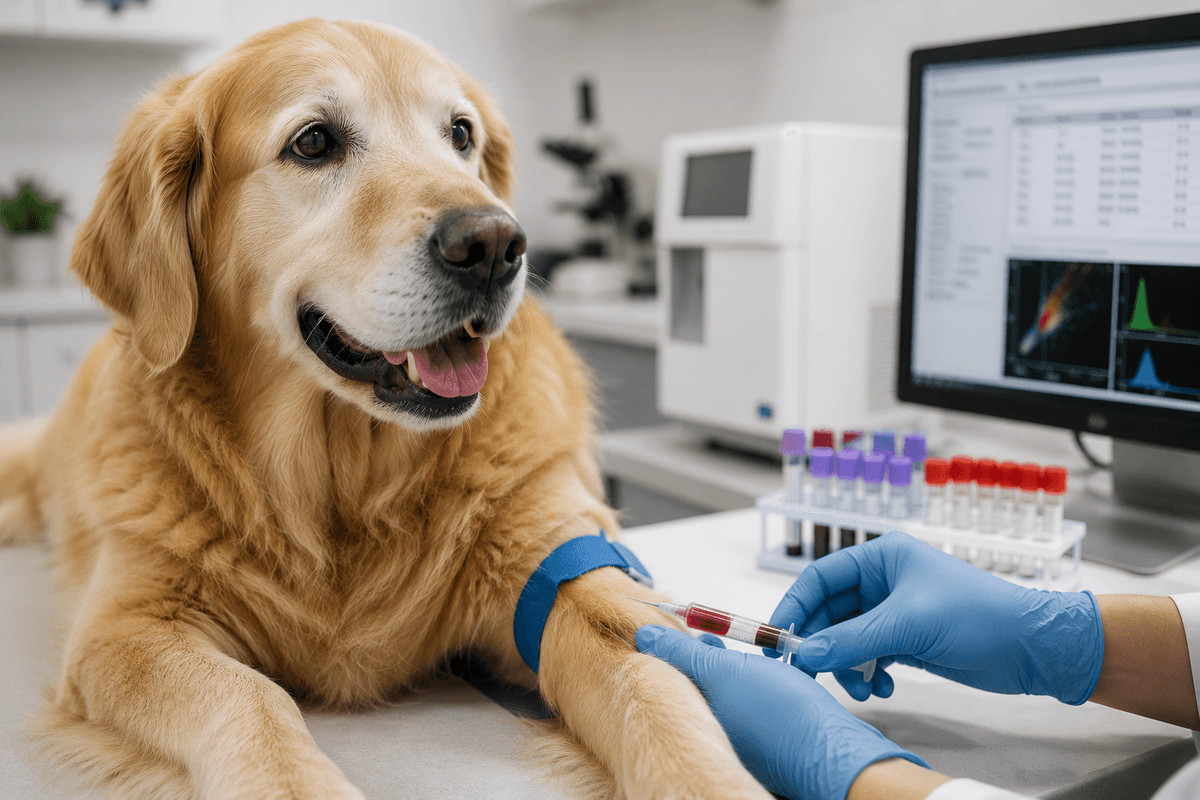
For decades, the standard veterinary wellness visit has relied on a chemistry panel and a complete blood count (CBC). While these tests are invaluable for assessing organ function and detecting infection, their role in cancer detection has historically been indirect. However, the landscape of veterinary oncology is shifting. With the advent of "liquid biopsies" and advanced biomarker assays, the question of whether a simple blood draw can detect the "silent killer" in our canine companions is more relevant than ever.
It is a common misconception that a "normal" blood test equates to a "cancer-free" dog. In truth, many malignancies, particularly early-stage solid tumors, do not cause systemic changes detectable on standard CBCs or chemistry profiles. For example, a dog with a localized soft tissue sarcoma or an early-stage mammary tumor may have perfect liver and kidney values and a normal white blood cell count.
When routine bloodwork does signal cancer, it is often through secondary effects known as paraneoplastic syndromes. One of the most common signals is hypercalcemia of malignancy, an elevation in blood calcium often associated with lymphoma, anal sac adenocarcinoma, or multiple myeloma (de Brito Galvão et al., 2017). Other clues include extreme neutrophilic leukocytosis, a very high white blood cell count, which can be seen in some carcinomas (Ziccardi et al., 2022), or persistent anemia and thrombocytopenia, meaning low platelets, when cancer infiltrates the bone marrow (Childress, 2012).
Beyond the primary paraneoplastic signals, cancer can manifest in the red blood cell line as either a chronic anemia due to systemic iron sequestration, blood loss if internal bleeding has occurred, or, less commonly, as an erythrocytosis driven by inappropriate erythropoietin production from certain tumors like renal carcinomas (Bahr et al., 2013; Gorman et al., 2024; Kariwa et al., 2009).
Despite these clues, routine tests are non-specific. An elevated calcium level, low red cell count, or low platelet count can be caused by many non-cancerous diseases. Therefore, a normal blood panel does not rule out cancer, and an abnormal one does not confirm it. The entire clinical picture, including physical exams and imaging, must be considered by a veterinarian (Sutthigran et al., 2024).
Modern veterinary medicine has moved toward detecting cancer-specific markers. Cancers that are most readily identified via blood-based screening are typically those with a high systemic "footprint," such as:
- Hematologic malignancies: Lymphoma and leukemia are frequently identified by detecting abnormal circulating cells, or lymphocytosis, or using flow cytometry on blood samples (Rout et al., 2021; Comazzi et al., 2011).
- Vascular tumors: Hemangiosarcoma often sheds detectable fragments of DNA or causes specific clinicopathological changes, such as schistocytes, or fragmented red blood cells (Suphonkhan et al., 2024).
- High-metabolic tumors: Osteosarcoma and certain carcinomas may shed enough cellular debris to be detected by specialized "liquid biopsy" platforms that use next-generation sequencing to find cancer-associated genomic mutations (Wang et al., 2022; Flory et al., 2024).
One of the most accessible specialized blood tests currently available to veterinarians is the Nu.Q® Canine Cancer Test. This test does not look for the cancer cells themselves, but rather for nucleosomes, which are segments of DNA wrapped around histone proteins. While they are present in all cells, they are released into the bloodstream in much higher concentrations during the rapid cell death and turnover associated with malignant tumors (Wilson-Robles et al., 2020).
The Nu.Q® test is primarily validated for the detection of lymphoma and hemangiosarcoma, two of the most aggressive and common canine cancers. In clinical trials, the test demonstrated a high degree of accuracy for these specific types. For hemangiosarcoma, the test has shown a sensitivity of approximately 82%, and for lymphoma, roughly 77% (Wilson-Robles et al., 2022; IDEXX, 2024). This means it is quite effective at "catching" these cancers when they are present.
However, the Nu.Q® test has significant limitations that owners must understand. First, its specificity is roughly 97% in healthy dogs, meaning there is a 3% false-positive rate where a healthy dog might test "high" for nucleosomes. More importantly, nucleosome elevation is not exclusive to cancer. Systemic inflammation, sepsis, or severe trauma can also spike these levels, potentially leading to a "suspected cancer" result in a dog that is actually suffering from a severe infection (Wilson-Robles et al., 2022).
Furthermore, Nu.Q® is much less effective at detecting other types of cancer. While it may catch some cases of osteosarcoma or high-grade mast cell tumors, many other common cancers, such as low-grade mast cell tumors, mammary tumors, or early-stage carcinomas, often do not shed enough nucleosomes to trigger a positive result (IDEXX White Paper). Therefore, a "normal" Nu.Q® result is not a guarantee that a dog is cancer-free. It simply means the nucleosome levels are within the range expected for healthy dogs at that moment.
It is estimated that dozens of cancer types remain undetectable by current blood-based screening. Small, slow-growing, or "encapsulated" tumors often do not shed enough cell-free DNA or nucleosomes into the peripheral blood to be captured by a standard draw. Cancers such as subcutaneous mast cell tumors, many soft tissue sarcomas, thyroid carcinomas, and early-stage transitional cell carcinomas of the bladder often leave a normal hematological and biochemical profile (Colombe et al., 2022; Pinello et al., 2022).
The "holy grail" of cancer screening is a single test that can detect any malignancy at Stage I. While advanced genomic oncopanels are moving us closer by identifying mutations in "driver genes," we are not there yet (Chon et al., 2023). As highlighted by Fenger and London (2026), the biological diversity of canine cancer means that no single biomarker is universal.
Can blood tests screen for cancer in dogs? The answer is a nuanced "sometimes." We have entered an era where specific cancers, like lymphoma and hemangiosarcoma, can be flagged earlier through tests like Nu.Q® and liquid biopsy NGS panels. However, these tools are adjuncts to, not replacements for, traditional veterinary diagnostics such as x-rays, ultrasound, and sampling of growths or tumors. A dog with cancer will often have normal blood work, which is why vigilance remains the most effective screening tool: annual physical exams, monitoring for new lumps or bumps, and paying attention to subtle changes in appetite, energy, or weight loss.
When subtle clinical signs appear, blood tests become just one part of a much larger diagnostic puzzle, and early detection often provides the best chance for a good outcome. Vetmodo makes it easy to find local primary care veterinarians or board-certified oncology specialists equipped to perform advanced screenings like the Nu.Q® test and interpret complex results. Search Vetmodo today to connect with a vet who can help you build the right diagnostic plan for your dog.